 GOAT TATTOO
Peony Tattoo Meaning: King of Flowers in China, Japan and Vietnam
Published October 21, 2026
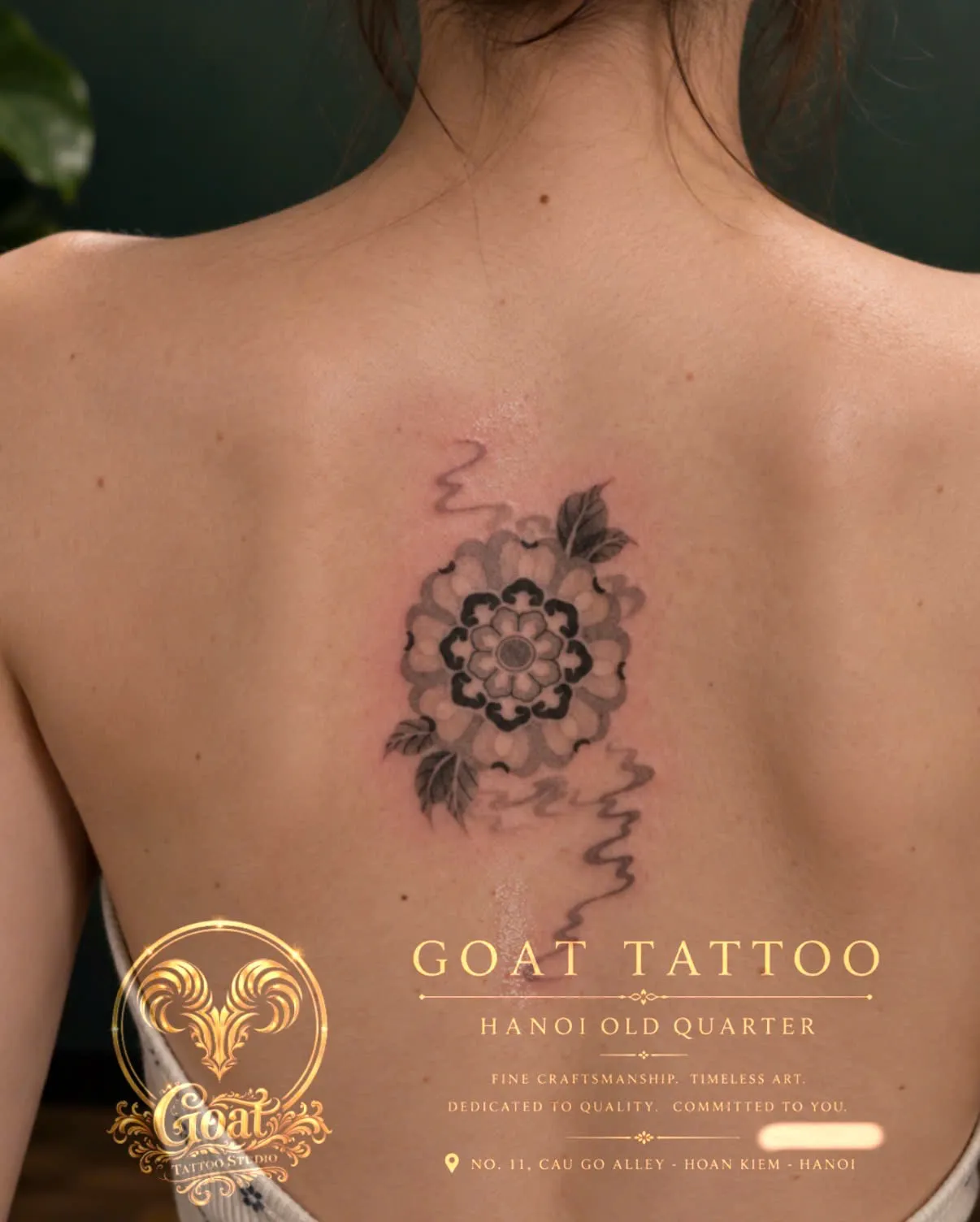
Short answer: the peony is the “king of flowers” in East Asian tradition and stands for wealth, honor, prosperity and romance. In Japanese irezumi, the peony (botan) is one of the most important flowers. It’s often paired with a lion, and it also carries a bold, live-for-the-moment spirit. In the West it’s linked to happy marriage and good fortune. Peonies are also popular for a practical reason: their big, layered blooms fill spaces and wrap around the body better than almost any other flower.
Peonies show up everywhere in tattooing, from full Japanese back pieces to small fine-line flowers. Here’s what they mean in each tradition and how to use them in a design.
China: the king of flowers
In China the peony (mǔdān, 牡丹) has been called the king of flowers for well over a thousand years. It was a favorite of the Tang dynasty court and became a symbol of wealth, rank and honor. In Chinese art a vase of peonies is a wish for prosperity, and the flower is also linked to beauty and love. The city of Luoyang still holds a famous peony festival every spring.
Japan: botan in irezumi
The peony came to Japan from China and became one of the main flowers of Japanese art and tattooing.
- Wealth and good fortune, as in China.
- A bold, carefree spirit: in irezumi the peony is often described as a flower of daring, someone willing to take risks. Its big, heavy blooms are beautiful but don’t last long.
- The lion and the peony (botan ni karajishi): the classic pairing of the king of beasts with the king of flowers. See our foo dog guide.
- Seasons: Japanese tattooing often matches flowers to seasons. The peony belongs to late spring and early summer.
Peonies also appear with phoenixes, cranes, peacocks, snakes and koi in larger Japanese pieces. Our Japanese motifs guide covers those subjects.
The West: myth and marriage
The name “peony” comes from Paeon, a physician of the gods in Greek mythology. In one version of the story, Zeus turned him into a flower to save him from his jealous teacher. In the Victorian language of flowers, peonies could mean bashfulness, but today they’re more often linked to romance, a happy marriage and prosperity. In the United States they’re traditionally the flower for a 12th wedding anniversary.
A note on the name in Vietnam
In Vietnamese, hoa mẫu đơn is the name for the peony, but in everyday speech it often refers to a completely different plant: ixora, a shrub with small red flowers in round clusters, common in gardens and temples. If you’re getting a peony tattoo in Vietnam, show your artist a reference picture so everyone means the same flower. In Vietnamese decorative art, the real peony is linked to phú quý: wealth and honor.
Peony colors
Color meanings vary between sources, so use them as a guide, not a code:
- Red: passion, prosperity and honor; the most traditional choice in Japanese work.
- Pink: romance, love and a happy marriage.
- White: purity, or sometimes regret and apology.
- Yellow or gold: wealth and new beginnings.
- Black and grey: lets the shape and shading carry the design, and suits subtle or larger pieces.
Peony vs. rose
People often mix them up in designs. A peony is rounder and fuller, with many soft, ruffled petals, no thorns and deeply cut leaves. A rose has tighter spiraling petals and thorny stems. If you want the Japanese meaning, ask for a peony; if you want classic Western love symbolism, see our rose guide.
Design and placement
- Fillers in big pieces: peonies fill awkward areas such as the shoulder, hip and elbow, and connect larger figures.
- A single large bloom: shoulder blade, thigh, hip or upper arm. The round shape suits rounded body areas.
- Half sleeves and sleeves: several blooms with leaves and wind bars running down the arm.
- Fine line: a single small peony or a bud on the wrist, ankle or collarbone. Keep the petals simple so they don’t blur over time.
At GOAT Tattoo Studio
Peonies show up across our gallery, from a black and grey peony with smoke-like ribbons on the upper back and a fine-line peony with a Vietnamese lantern on the hip, to color Japanese pieces such as a crane and peony leg sleeve, a phoenix and peony leg sleeve and a peacock and peony full back. At your consultation we can help you choose the color, size and companions for your peony. Our flower meanings guide covers other flowers.
Planning a Japanese tattoo in Hanoi? Our Japanese tattoo page has prices, the artists who do this style and recent work.
Related Guides
- Flower Tattoo Meanings Explained
- Japanese Tattoo Motifs and What They Actually Mean
- Foo Dog Tattoo Meaning: Shishi, Komainu and Vietnam's Nghê
- Rose Tattoo Meaning: Victorian Code vs. Ancient Secrecy
- Chrysanthemum Tattoo Meaning: Imperial Honor vs. Funeral Flower
- Lotus Tattoo Meaning: Buddhist Symbol vs. Vietnam's National Flower
- Phoenix Tattoo Meaning Explained
- Peacock Tattoo Meaning Explained
- Cherry Blossom Tattoo Meaning: Sakura, Plum or Peach Blossom?
- Lily Tattoo Meaning: Purity, Rebirth and What Each Colour Means
Ready to book your tattoo in Hanoi?
Send us your idea and preferred dates — we'll reply with a clear quote before you sit in the chair.
Book Now