 GOAT TATTOO
Chrysanthemum Tattoo Meaning: Imperial Honor vs. Funeral Flower
Published October 18, 2026
Short answer: it genuinely depends which tradition you’re drawing from. In Japan, the chrysanthemum (kiku) is one of the most honored motifs in traditional tattooing, tied to the imperial throne and long life. Across much of Europe — France, Belgium, Italy, Poland among others — the same flower is specifically associated with graves and mourning. Neither meaning is more “correct”; they’re genuinely unrelated traditions that happen to use the same flower.
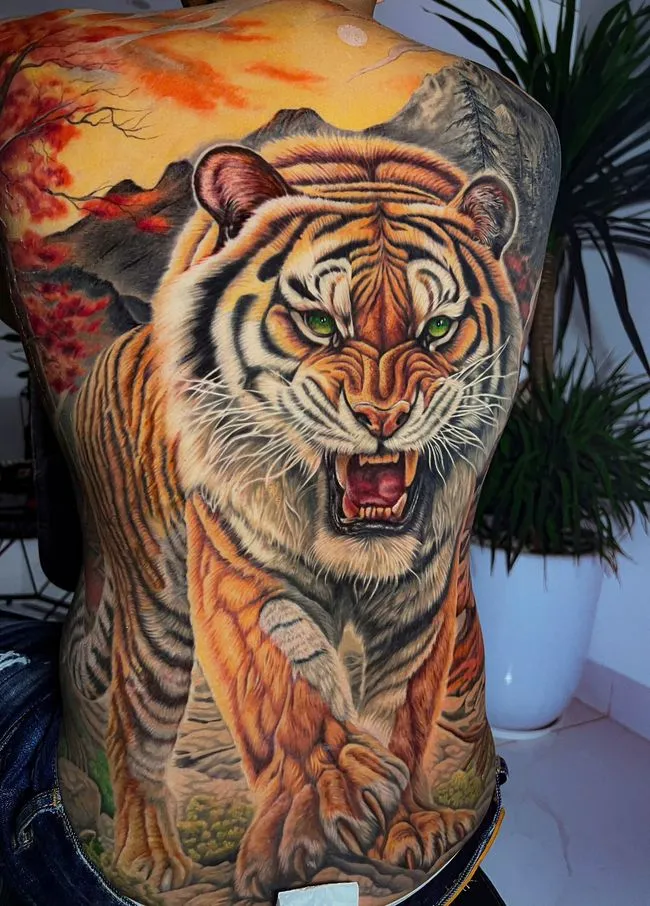
The chrysanthemum shows up constantly in Japanese-style tattoo work, almost always paired with koi, waves, or a samurai figure the way it is on this page’s hero image — but it’s a flower whose meaning splits hardest of any on this list depending on where you’re standing when you ask about it.
Japan: the Chrysanthemum Throne and the ninth day of the ninth month
In Japan, the kiku is about as high-status a symbol as a flower gets — it’s the official emblem of the Imperial Family, formally called the Chrysanthemum Throne, and has represented the emperor’s seat and authority for centuries. Beyond the imperial tie, it’s also strongly associated with longevity and rejuvenation, rooted partly in Kiku no Sekku (the Chrysanthemum Festival), one of Japan’s five traditional seasonal festivals, held on the ninth day of the ninth month and historically linked to wishes for a long life. In Japanese traditional tattooing specifically, a kiku carries real weight and respect rather than functioning as a generic decorative filler flower — it’s a genuine honor motif, not an afterthought bloom added to balance a composition.
Europe: specifically a flower for the dead, not a universal taboo
In several European countries, the chrysanthemum carries close to the opposite association. In France, Belgium, Italy, Poland, and Hungary in particular, chrysanthemums are the flower most closely tied to La Toussaint (All Saints’ Day) and the following Jour des Morts (All Souls’ Day) in early November, when families bring them to graves specifically because they bloom reliably at that time of year. The result is that in these countries, giving or wearing chrysanthemums outside that funerary context can read as genuinely odd or unsettling to someone from that background — it’s not a vague superstition, it’s a specific, widely understood seasonal association most people there grow up with. It’s worth being clear that this reading is European rather than universal — it isn’t the flower’s meaning in Japan, East Asia more broadly, or the US, where chrysanthemums are a completely ordinary autumn flower with no funeral association at all.
Why this one is genuinely worth checking before you commit
Most flowers on a “what does this mean” list carry one dominant reading with maybe a regional variation at the edges. The chrysanthemum is unusual because the two major traditions aren’t a light variation on each other — they’re close to opposite in tone, and both are real, specific, and widely known within their own context rather than one being some obscure footnote. If you’re drawing on the Japanese tradition specifically — the imperial association, the longevity symbolism, or simply want it as part of a traditional Japanese-style piece — that’s a genuinely well-respected choice with real history behind it. If you’ve got European family or spend real time in a country where the funeral association is strong, it’s worth knowing that context exists before you choose chrysanthemum over, say, a peony or a cherry blossom for a similar composition.
What actually matters when choosing
If the imperial or longevity meaning is what’s drawing you to it, say so at your consultation — a kiku done in the traditional Japanese style, with the right layered petal structure, is a different technical ask than a more Western, realistic botanical rendering, and it’s worth getting that distinction right from the start. If you’re simply drawn to how the flower looks and the European funeral association doesn’t mean anything to your own background or the people around you, that’s a completely legitimate reason to get one too — plenty of people worldwide wear chrysanthemum tattoos with zero connection to either tradition. The one thing worth avoiding is picking it purely because it looks nice without knowing either association exists, only to find out later from someone it means something specific to.
What to expect at GOAT Tattoo Studio
We’re happy to talk through which reading of the chrysanthemum you’re actually going for at your consultation, and whether a traditional Japanese-style treatment or a more botanical, realistic one fits what you want — our guide to flower tattoo meanings covers other commonly requested florals worth understanding beyond how they look.
Related Guides
- Flower Tattoo Meanings Explained
- Japanese Tattoo Motifs and What They Actually Mean
- Lotus Tattoo Meaning: Buddhist Symbol vs. Vietnam's National Flower
- Color & Japanese-Style Tattoos: What to Actually Look For
- Peony Tattoo Meaning: King of Flowers in China, Japan and Vietnam
- Cherry Blossom Tattoo Meaning: Sakura, Plum or Peach Blossom?
- Daisy Tattoo Meaning: Innocence, New Beginnings and Happiness
Ready to book your tattoo in Hanoi?
Send us your idea and preferred dates — we'll reply with a clear quote before you sit in the chair.
Book Now