 GOAT TATTOO
Cherry Blossom Tattoo Meaning: Sakura, Plum or Peach Blossom?
Published October 22, 2026
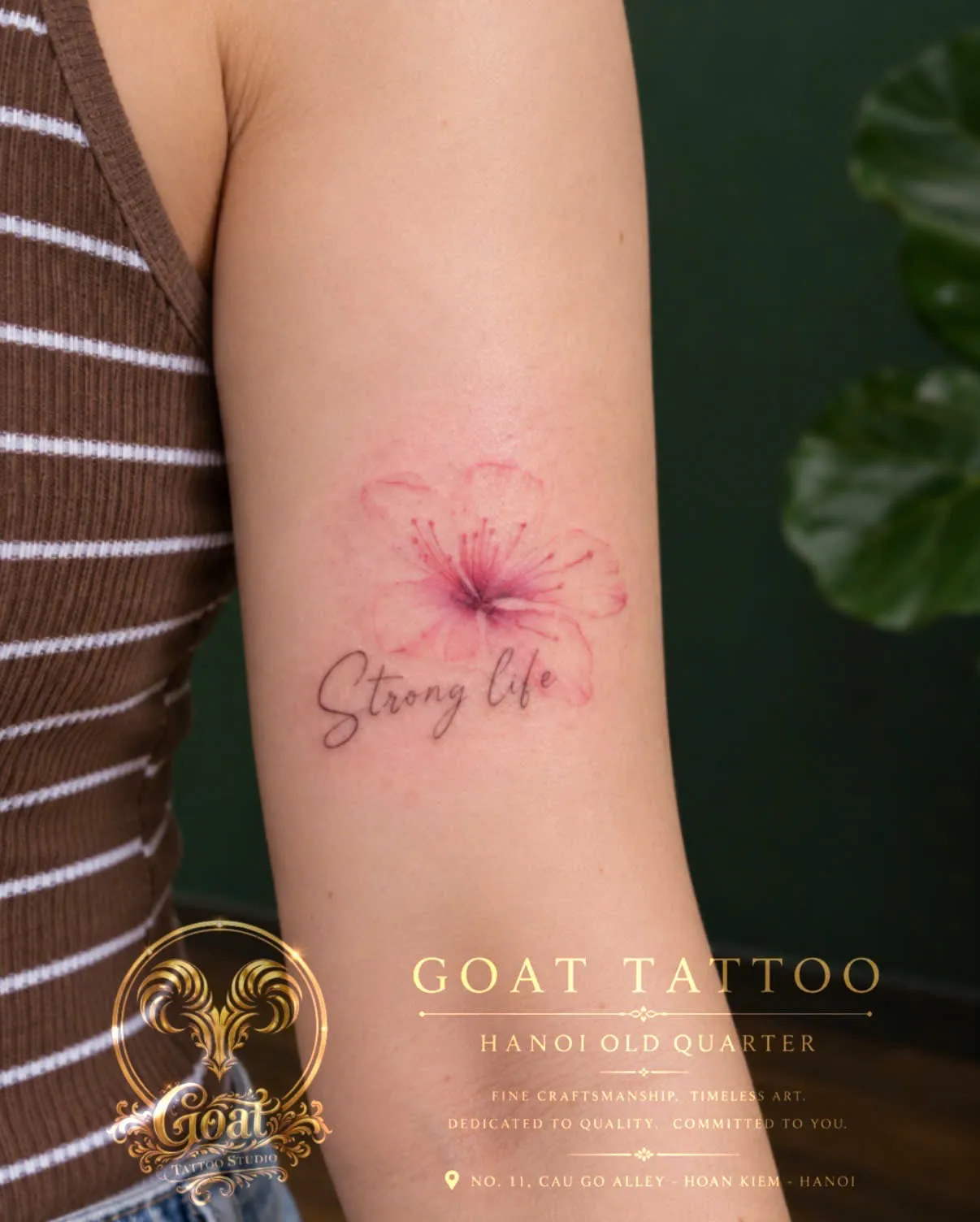
Short answer: a cherry blossom (sakura) tattoo is about the beauty of life because it’s short. In Japan, the blossoms open for only a week or two, and that brief bloom stands for living fully, accepting change and remembering what matters. In Japanese irezumi, falling petals were also linked to the samurai, who were expected to accept an early death. Outside Japan, cherry blossoms usually mean renewal, femininity and new beginnings. Many “cherry blossom” designs are really plum or peach blossoms, so it’s worth knowing which flower you’re asking for.
Cherry blossoms are one of the most requested flowers in tattooing, from small pink branches on the collarbone to scattered petals in full Japanese back pieces. Here’s what they mean, and how to tell them apart from the blossoms they’re often mixed up with.
Japan: beauty that doesn’t last
In Japan, cherry blossom season is a national event. Families, friends and coworkers gather under the trees for hanami, flower viewing, and the news tracks the bloom as it moves north across the country. A tree is in full bloom for only about a week before the petals fall.
That short life is the heart of the meaning. Japanese aesthetics calls it mono no aware: a gentle sadness at the passing of things, which makes them more precious. A cherry blossom tattoo can be a reminder to enjoy the present, a tribute to someone who died young, or a mark of a period in life that has ended.
The samurai and irezumi
In Japanese tradition, the cherry blossom became linked to the samurai. A blossom falls at its peak, before it fades, and a warrior was expected to face death in the same way, without clinging to life. That’s why sakura often appear in samurai tattoos and around warriors in full back pieces.
In irezumi, cherry blossoms are a spring flower. Artists match flowers to seasons, so sakura often appear with koi, dragons and tigers, scattered on wind bars and water. Falling petals add movement and fill the space between larger figures.
In the 20th century the cherry blossom was also used in Japanese wartime propaganda. Most people today read it simply as a flower, but it’s worth knowing the history if you’re placing sakura next to military imagery.
China: plum blossom is the main flower
In Chinese art, the more important blossom is the plum (méihuā, 梅花). It flowers at the end of winter, often in snow, so it stands for resilience, hope and strength in hard times. It’s one of the “Three Friends of Winter”, together with pine and bamboo. Cherry blossoms in China are linked more with feminine beauty and love.
Vietnam: peach blossom at Tet
In Hanoi and the north of Vietnam, the flower of the Lunar New Year (Tết) is the peach blossom, hoa đào. Before Tết, the streets fill with pink branches from flower villages such as Nhật Tân, and a branch in the house is a wish for luck and a good new year. In the south, yellow hoa mai takes the same role. So if you get a pink blossom branch in Hanoi, it can carry the Vietnamese meaning of luck, family and a fresh start, especially if the tattoo marks a trip here.
Cherry, plum or peach: how to tell them apart
The three flowers look similar, so they’re often mixed up in designs. The petals are the easiest way to tell:
- Cherry: each petal has a small notch at the tip. Flowers hang in clusters on long stems.
- Plum: round petals with no notch. Flowers sit close to the branch, usually one or two at a time.
- Peach: petals come to a slight point. Flowers are often a deeper pink and grow close to the branch.
If the meaning matters to you, tell your artist which flower you want and bring a reference photo.
Colors
- Pink: the classic choice; spring, love and new beginnings.
- White: purity and remembrance; common in memorial pieces.
- Red: a stronger, more passionate look; often used in ink-wash style designs with black branches.
- Black and grey: lets the branch and shading carry the design, and fits into black and grey Japanese work.
Design and placement
- Branches follow the body well: collarbone, shoulder, along the spine, ribs, or wrapping around the forearm.
- Falling petals can trail away from a branch and are easy to add to later.
- Small and fine line: keep it to a few flowers with simple petals. Very tiny petals and pale pink can blur or fade over time, so a slightly larger design lasts better.
- Companions: birds, cranes, koi, a moon, a name or a short phrase.
- In big Japanese pieces: sakura connect the main figures and show the season.
At GOAT Tattoo Studio
Cherry blossoms appear in many pieces in our gallery: a pink cherry blossom with a “Strong Life” script on the upper arm, a green frog sitting under a blooming branch on the shoulder, a red ink-wash dragon with blossoms on the upper arm, and a full back samurai among cherry blossoms. At your consultation we can help you choose the flower, color and size. Our flower meanings guide covers other flowers, and the peony guide covers the other big flower of Japanese tattooing.
Planning a Japanese tattoo in Hanoi? Our Japanese tattoo page has prices, the artists who do this style and recent work. For a small branch, see our fine line page.
Related Guides
- Flower Tattoo Meanings Explained
- Japanese Tattoo Motifs and What They Actually Mean
- Peony Tattoo Meaning: King of Flowers in China, Japan and Vietnam
- Chrysanthemum Tattoo Meaning: Imperial Honor vs. Funeral Flower
- Koi Fish Tattoo Meaning: Dragon Gate Legend
- Samurai Tattoo Meaning: Bushido, Ronin and Cherry Blossoms
- Lotus Tattoo Meaning: Buddhist Symbol vs. Vietnam's National Flower
- Crane Tattoo Meaning: Longevity & Sadako
- Geisha Tattoo Meaning: Artist, Not Courtesan
- Maple Leaf Tattoo Meaning: Canada, Momiji and Autumn Change
Ready to book your tattoo in Hanoi?
Send us your idea and preferred dates — we'll reply with a clear quote before you sit in the chair.
Book Now