 GOAT TATTOO
Geisha Tattoo Meaning: Artist, Not Courtesan
Published October 22, 2026
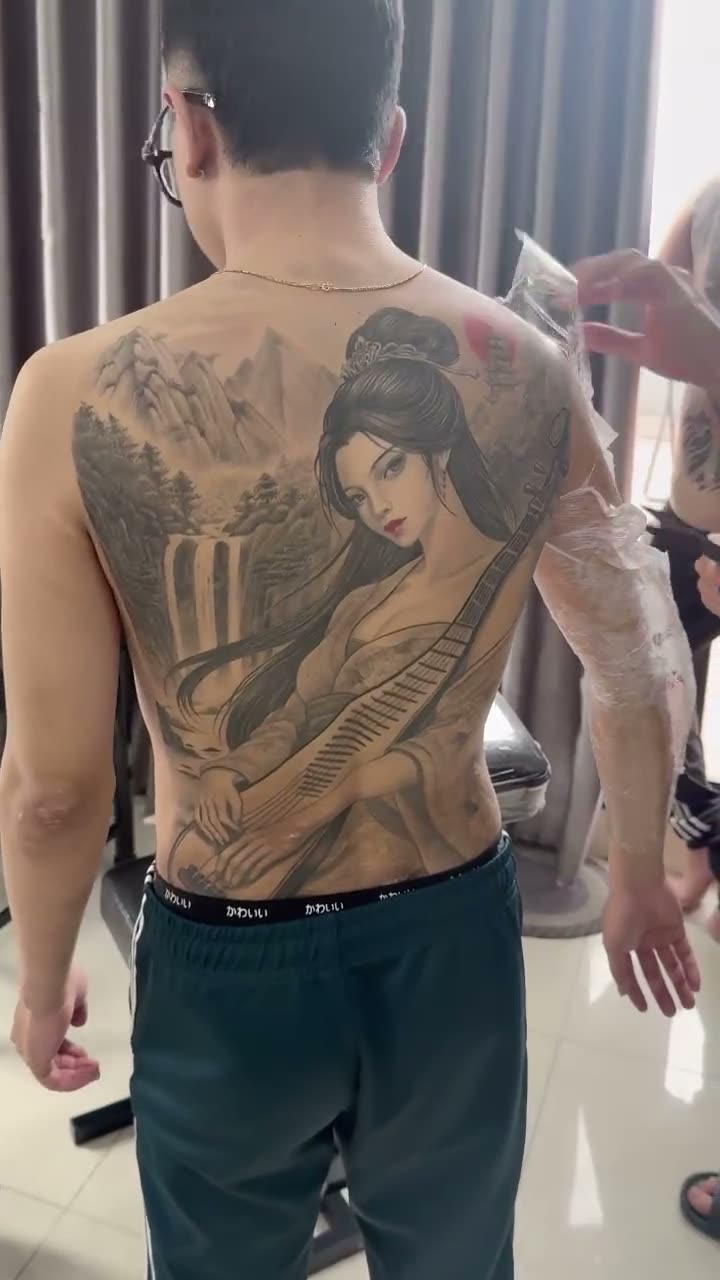
Short answer: a geisha tattoo stands for beauty, grace, discipline and mastery of an art. Geisha are professional entertainers trained for years in dance, music, singing and conversation, so the tattoo often honours dedication and inner strength behind a calm face. Many designs add a second meaning: a geisha holding a hannya mask or with half her face as a skull shows that beauty and danger, or life and death, live side by side. A geisha is not a courtesan, and knowing that difference helps you choose the right image.
The geisha is one of the most recognisable figures in Japanese-style tattooing, especially in large black and grey pieces. Here is who geisha really are, what the tattoo means, and how to design one well.
Who geisha really are
The word geisha means “person of the arts”. Geisha entertain guests at teahouses and banquets with traditional dance, the three-stringed shamisen, singing and witty conversation. The profession grew in the 18th century, and the first geisha were actually men; women soon took over the role.
Training is long and strict. In Kyoto, apprentices are called maiko and fully trained geisha are called geiko. A maiko wears more colourful kimono, long trailing obi and elaborate hair ornaments (kanzashi); when she becomes a geiko, her red collar changes to white in a ceremony, and her look becomes simpler and more refined.
Geisha are not courtesans
In the West, geisha are often confused with courtesans. Japan’s high-ranking courtesans, called oiran, were a different profession with a different look: they tied their obi in front and wore many large hairpins and very tall wooden sandals. Geisha sell their art, not their bodies. If you want your tattoo to mean artistry and elegance, it’s worth making sure the design doesn’t borrow the courtesan’s style by mistake.
What a geisha tattoo means
- Beauty and grace: the classic meaning, often with flowers and a soft, calm expression.
- Discipline and mastery: years of practice to perfect an art; a good choice for musicians, dancers and anyone devoted to a craft.
- Strength behind a calm face: keeping composure, mystery and control.
- Love of Japanese culture: a trip to Japan, or respect for its traditional arts.
Two faces: hannya and skull geisha
Modern designs often show two sides of one woman. A geisha holding or wearing a hannya mask, the mask of a woman turned into a demon by jealousy, means hidden emotion or the danger beneath beauty. A geisha whose face is half skull is a reminder that beauty fades and life is short. These versions are popular, but they are modern tattoo ideas, not traditional Japanese symbols.
In Japanese art and tattooing
Geisha images come mostly from ukiyo-e woodblock prints of beautiful women (bijin-ga), rather than from the heroes and legends of classic Japanese tattooing. That’s why they fit so well into Japanese-style work: the same prints gave tattoo artists their waves, flowers and clouds. Common companions are cherry blossoms for the beauty of a short life, peonies for wealth and confidence, a folding fan, a paper umbrella, lanterns and mountain landscapes. Our guide to Japanese tattoo motifs covers the others.
Design and placement
- Full back, thigh or sleeve: room for the full figure, kimono patterns and a landscape behind her.
- Upper arm, calf or forearm: a portrait of the face and hair ornaments.
- Details to get right: the hairstyle, kanzashi, collar and the way the kimono closes (left over right; right over left is for the dead). Bring references.
- Style: black and grey realism gives soft skin and fabric; traditional Japanese colour uses bold reds, blacks and patterned kimono.
- Size: a face needs room. Very small geisha portraits lose their eyes and lips as the tattoo ages.
At GOAT Tattoo Studio
Our gallery includes a black and grey full back piece of a geisha with a stringed instrument against a flowing mountain and waterfall landscape. At your consultation we can help you choose a pose, the details of the kimono and hair, and the companions that carry your meaning.
Planning a Japanese-style piece in Hanoi? Our Japanese tattoo page shows prices, the artists who do this style and recent work.
Related Guides
- Japanese Tattoo Motifs and What They Actually Mean
- Hannya Mask Tattoo Meaning: Rage vs. Sorrow
- Cherry Blossom Tattoo Meaning: Sakura, Plum or Peach Blossom?
- Peony Tattoo Meaning: King of Flowers in China, Japan and Vietnam
- Koi Fish Tattoo Meaning: Dragon Gate Legend
- Color & Japanese-Style Tattoos: What to Actually Look For
- Japanese Wave Tattoo Meaning: Hokusai's Great Wave and Irezumi Water
- Oni Mask Tattoo Meaning: Demon, Protector or Both?
Ready to book your tattoo in Hanoi?
Send us your idea and preferred dates — we'll reply with a clear quote before you sit in the chair.
Book Now