 GOAT TATTOO
Black & Grey Realism Tattoos: What to Actually Look For
Published August 16, 2026
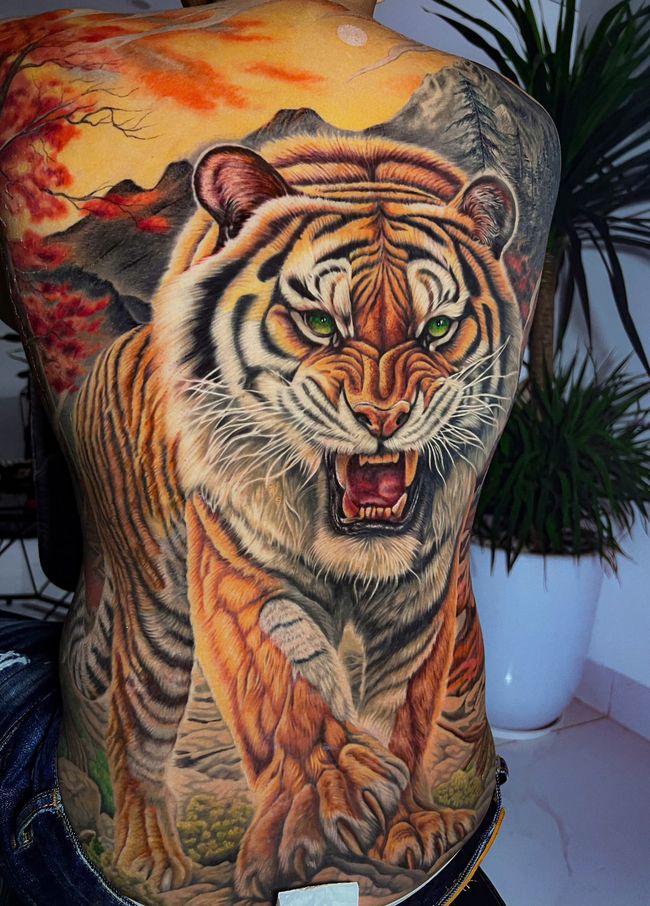
Black & grey realism grew out of single-needle shading techniques developed in Chicano tattoo culture in the mid-20th century — fine gradients built from black ink diluted into greys, originally used for portrait and religious imagery, later adopted broadly for photorealistic animals, portraits, and detailed scenes. Unlike bold traditional styles, this one lives or dies on shading control rather than linework, which makes it worth knowing what separates a genuinely skilled piece from one that just looks impressive in a single photo.
What separates smooth shading from a patchy piece
The technical marker to actually look for is gradient smoothness — how cleanly one shade transitions into the next, without visible harsh edges or blotchy patches where the artist’s passes didn’t blend evenly. This is hardest to fake and easiest to spot in a portfolio’s close-up shots, not the wide-angle photos studios often lead with. For portrait work specifically, proportion and likeness accuracy matter more than in almost any other style — a skilled realism artist can render depth and dimension that reads correctly from a normal viewing distance, not just up close. Look for consistent contrast control across a whole piece too: realism that goes flat in some areas and overly dark in others usually points to inexperience with the gradual buildup this style actually requires.
What to know before booking
- This style rewards patience during healing. Fine gradients can lose some crispness if the healing process is rushed or handled poorly — proper aftercare matters more here than in bolder, high-contrast styles where minor blurring is less noticeable.
- Portraits carry real stakes. If likeness matters to you — a specific person, a pet — ask to see portrait-specific work in a portfolio, not just general realism, since rendering a recognizable face is a distinct skill from shading a realistic animal or object.
- Contrast fades differently than bold linework over time. Because this style relies on subtle shading rather than solid black fill, expect it to soften gradually over years more than a bold blackwork piece would — that’s inherent to the style, not a quality issue.
What to expect at GOAT Tattoo Studio
Browse our black & grey realism gallery and look closely at shading transitions and any portrait work specifically, since that’s the clearest signal of skill in this style. During consultation, we’ll talk through reference photos in detail — for portraits especially, more reference angles genuinely help.
Related Guides
Ready to book your tattoo in Hanoi?
Send us your idea and preferred dates — we'll reply with a clear quote before you sit in the chair.
Book Now