 GOAT TATTOO
How to Find Tattoo Design Ideas Before You Book in Hanoi
Published August 17, 2026
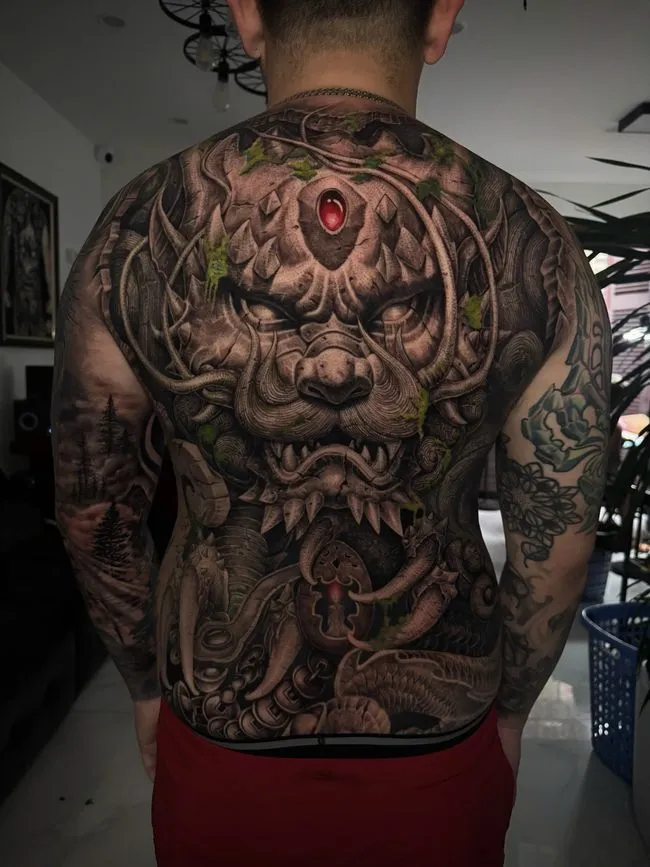
Short answer: yes, bring Pinterest or Instagram references — a good artist treats them as inspiration, not a copy request, and redraws the idea to fit your body, size, and style, so your finished tattoo won’t end up looking exactly like someone else’s.
Before almost anyone books a tattoo, they spend real time scrolling — Pinterest boards, Instagram saves, screenshots from random searches. That instinct is a good one; a reference photo communicates size, line weight, and placement in a way words never quite manage. The catch is that most of what people find this way isn’t from a real studio, on real skin, healed and photographed honestly — it’s illustration-style art that was never actually tattooed, which sets expectations that don’t quite match reality.
Why real studio photos matter more than generic inspiration boards
A photo of an actual tattoo, done by an actual artist, tells you things a clean digital illustration can’t: how the linework holds up on a curved or bony area, how color actually sits in skin versus on a screen, how a design this size reads at this specific placement. Browsing our gallery — real work from our artists, not stock inspiration — gives you a much more honest starting point for what’s actually achievable, and a clearer sense of which artist’s style matches what you have in mind.
Browsing by style
Our gallery has a style filter for exactly this reason — six categories, each with a distinct feel:
- Color / Japanese — bold color work and traditional Japanese-influenced imagery (koi, dragons, waves, florals), built for pieces that are meant to be seen, not hidden.
- Black & Grey Realism — shading-heavy, photorealistic work: portraits, animals, detailed scenes rendered in black and grey tones.
- Blackwork / Tribal — solid black linework and fill, geometric or tribal-influenced, high contrast.
- Fine Line — thin, minimal linework, often small — the style most small first-timer pieces fall into.
- Lettering — names, words, and short phrases, where clean execution matters more than flourish.
- Watercolor / Illustrative — softer, painterly color blending, illustration-influenced rather than photorealistic.
You don’t need to land on exactly one category before booking — plenty of real tattoos blend elements from two. The filter is there to help you get a feel for what each style actually looks like on skin, not to box you in.
How to actually use what you find
- Save more than one reference, not just one “perfect” photo. Two or three examples that each capture a different part of what you want (this line weight, that shading style, this placement) give an artist far more to work with than a single image you’re hoping gets copied exactly.
- Note what you like about each one, specifically. “The shading in this one” or “the size relative to the wrist” is more useful going into a consultation than the image alone — it tells the artist which part actually matters to you.
- Don’t expect an exact copy, and don’t ask for one of someone else’s actual tattoo. References are a starting point for your own design, not a template to trace — a good artist will use them to understand direction, then build something that’s genuinely yours.
- Screenshot or save them somewhere you’ll actually have on hand — your phone’s camera roll works fine — so you’re not trying to describe a half-remembered image from memory during your consultation.
What to expect at GOAT Tattoo Studio
Bring whatever you’ve saved to your consultation, even if it’s a messy mix of ideas rather than one clear plan — that’s normal, and it’s genuinely useful to us either way. We’ll talk through what draws you to each reference and work from there toward something built for your placement, size, and skin, not a direct copy of someone else’s piece.
Related Guides
Ready to book your tattoo in Hanoi?
Send us your idea and preferred dates — we'll reply with a clear quote before you sit in the chair.
Book Now