 GOAT TATTOO
Japanese Wave Tattoo Meaning: Hokusai's Great Wave and Irezumi Water
Published October 22, 2026
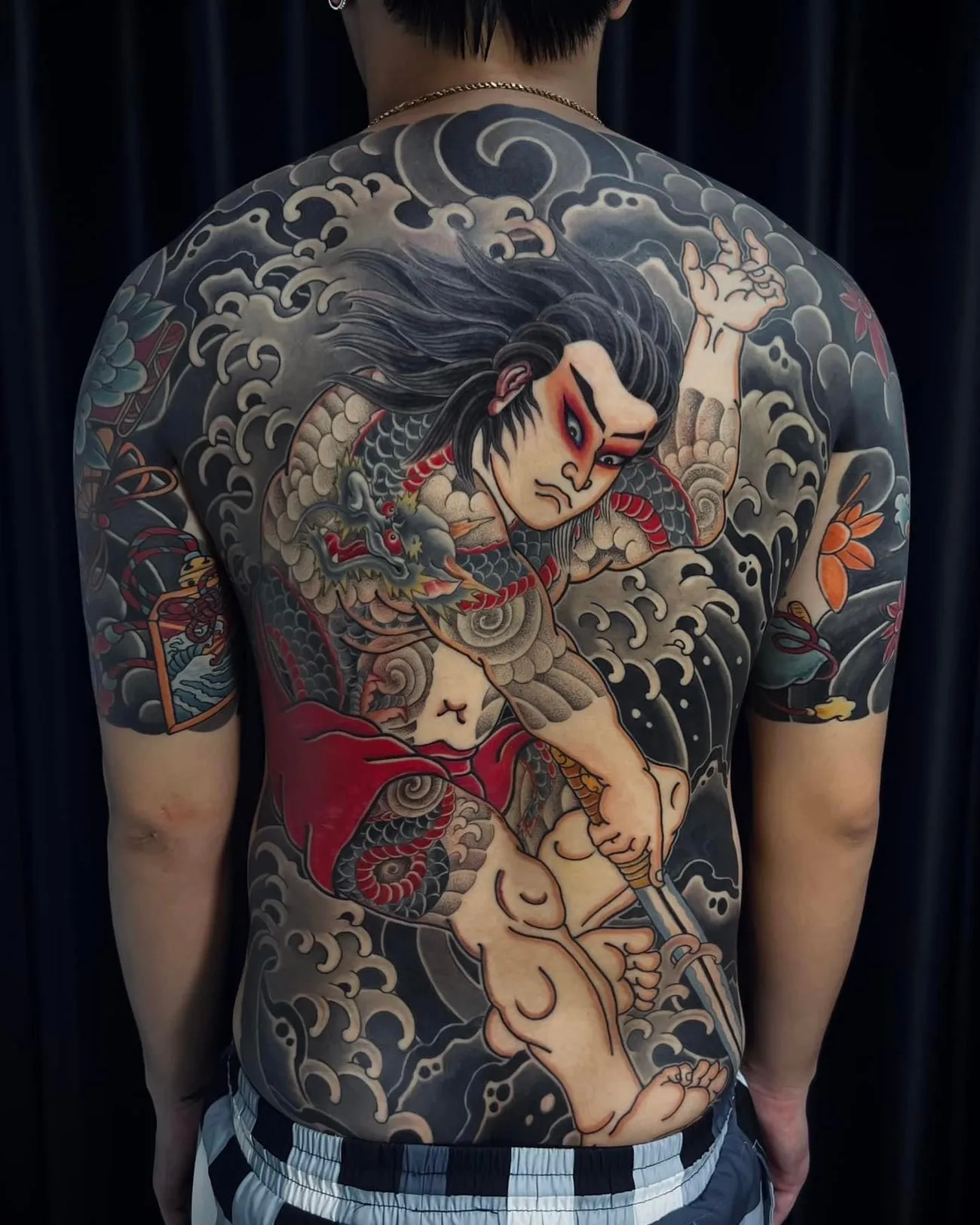
Short answer: a Japanese wave tattoo stands for strength, resilience and the power of nature, which is both beautiful and dangerous. A wave also means life’s ups and downs, and the idea of moving with them instead of fighting them. As a standalone design, it usually refers to Hokusai’s famous print “The Great Wave off Kanagawa”. In traditional Japanese tattooing (irezumi), waves are just as important as a background: water connects koi, dragons and warriors into one big piece and gives them a setting and movement.
Waves appear in almost every large Japanese tattoo, and the Great Wave is one of the most copied images in the world. Here’s where the motif comes from, what it means and how to make a wave tattoo that still looks good years later.
Hokusai’s Great Wave
“The Great Wave off Kanagawa” is a woodblock print by the Japanese artist Katsushika Hokusai, made around 1831 as part of his series Thirty-six Views of Mount Fuji. It shows a huge wave curling over three small boats, with Mount Fuji small in the distance.
The print is often read as a picture of nature’s power and human courage: the rowers keep going under a wave that could crush them. Fuji, calm and unmoving in the background, adds a sense of balance. As a tattoo, the Great Wave can mean facing something bigger than yourself, a love of the sea, or simply an appreciation of Japanese art.
Water in irezumi
Japanese tattooing grew alongside ukiyo-e woodblock prints in the Edo period, and it uses the same style of water: curling crests, claw-like foam and strong outlines. In a large piece, the background is built from three main elements: water, wind bars and clouds. Water usually fills the lower part of the body and the areas around the main figure.
Waves add their own meaning to the subject they surround:
- Koi: a koi swimming up through rough water stands for effort and determination.
- Dragons: in Japanese myth, dragons rule water and rain, so waves are their natural home.
- Warriors and heroes: a figure fighting among waves shows a struggle against fate or nature.
- Raijin and Fujin: waves and clouds together create a full storm scene.
Seigaiha: the wave pattern
Seigaiha (青海波, “blue sea waves”) is a pattern of overlapping arcs that looks like rows of small waves. In Japan it’s a sign of calm, good luck and a peaceful life that continues like endless waves. It’s often seen on kimono and ceramics. In tattoos it works well as a filler, a band or a background in geometric or Japanese designs.
What a wave means outside Japan
For many people, a wave tattoo is simply about the sea: surfing, sailing, a coastal hometown or a trip that changed them. Others choose it for its emotional meaning: calm after a hard time, “going with the flow”, or remembering that difficult periods pass like waves.
Color or black and grey
- Color: the classic look uses blue water with white foam, often combined with red or orange in the main figure.
- Black and grey: the water is built from black outlines and shading, and the skin itself becomes the foam. It looks bold and ages well.
- Blackwork: solid black waves or seigaiha patterns give a modern, graphic look.
Design and placement
- Size matters: the Great Wave has many fine details in its foam. If you shrink it too much, those details can blur into one shape over the years. For a small tattoo, ask for a simplified version with fewer claws and bolder lines.
- Small waves: wrist, ankle, behind the ear or the forearm. A simple wave line with a sun or moon is a common choice.
- Medium pieces: forearm, calf or upper arm, where the curl of the wave has room to show.
- Large pieces: in sleeves, back pieces and leg sleeves, waves flow around the main subject and tie everything together.
- Adding later: water is easy to extend, so a wave background is a good way to connect tattoos you already have.
At GOAT Tattoo Studio
Waves run through many of the pieces in our gallery: a full back Japanese warrior with a red and white face among crashing waves, color full backs of a warrior fighting a dragon and a warrior with a sword in the sea, an orca jumping through a wave on the upper arm, a blackwork wave with a red sun on the calf and a fine line wave charm with a crescent moon. At your consultation we can help you choose the size, style and amount of detail that will last. For other Japanese subjects, see our Japanese motifs guide.
Planning a Japanese tattoo in Hanoi? Our Japanese tattoo page has prices, the artists who do this style and recent work.
Related Guides
- Japanese Tattoo Motifs and What They Actually Mean
- Koi Fish Tattoo Meaning: Dragon Gate Legend
- Dragon Tattoo Meaning: East vs. West
- Raijin and Fujin Tattoo Meaning: Japan's Thunder and Wind Gods
- Color & Japanese-Style Tattoos: What to Actually Look For
- Samurai Tattoo Meaning: Bushido, Ronin and Cherry Blossoms
- Whale Tattoo Meaning: Paikea & Orca Crests
- Octopus Tattoo Meaning: Myth vs. Modern
- Palm Tree Tattoo Meaning: Paradise, Resilience and Victory
- Cloud Tattoo Meaning: Auspicious Clouds, Dragons and Heaven
Ready to book your tattoo in Hanoi?
Send us your idea and preferred dates — we'll reply with a clear quote before you sit in the chair.
Book Now