 GOAT TATTOO
Visible Tattoos in Vietnam: Do You Need to Cover Up?
Published October 18, 2026
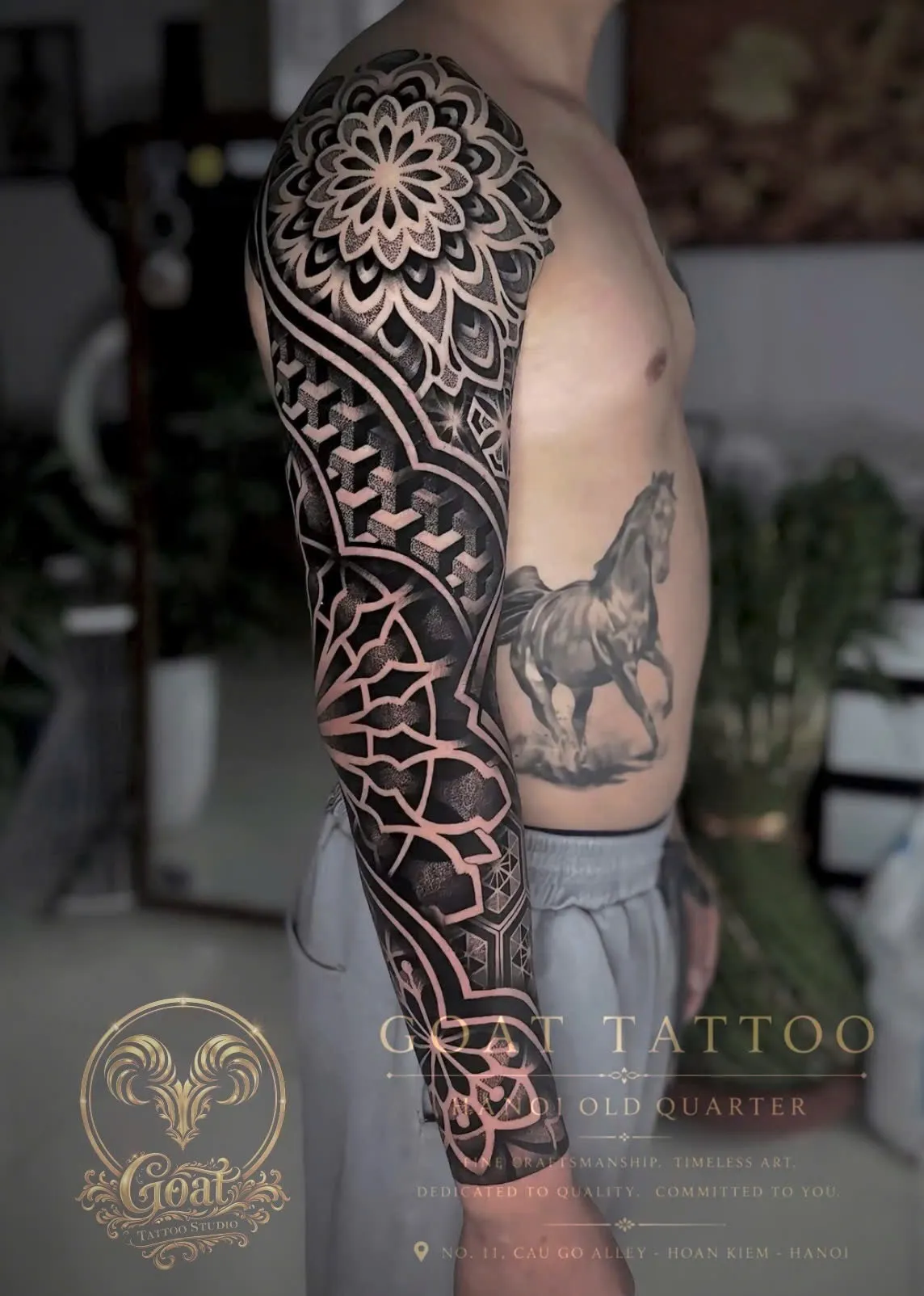
Short answer: No, as a traveller you don’t need to hide your tattoos in Vietnam. Tattoos are legal, common among young people in Hanoi and Ho Chi Minh City, and you won’t be refused at hotels, pools or beaches because of them. You may get curious looks, and some older people still link tattoos with gangs. It’s polite to cover up when visiting temples and pagodas, when meeting a Vietnamese family, and in formal settings. If you plan to work here, especially as a teacher, ask your employer about their rules before you arrive.
How people in Vietnam see tattoos today
Attitudes have changed fast, but not evenly:
- Young, urban Vietnamese often have tattoos themselves, and studios are easy to find across Hanoi’s Old Quarter.
- Older generations grew up when tattoos were linked with gangs and prison. Our history of tattooing in Vietnam explains where that comes from. Some older people may stare, comment or seem uneasy, especially with large or dark designs.
- Rural areas and small towns tend to be more conservative than the big cities.
- Foreigners get more leeway. Most people assume a tattooed tourist is simply a tourist, not part of the old underworld image.
Staring is usually curiosity, not hostility. A smile goes a long way.
Where it’s polite to cover up
- Temples, pagodas and shrines. Shoulders and knees should be covered anyway, and covering large tattoos is a sign of respect. Our guide to visiting temples with a healing tattoo covers the details.
- Memorial sites. Dress conservatively at places like the Ho Chi Minh Mausoleum, where shorts and sleeveless tops aren’t allowed.
- Meeting a Vietnamese partner’s family or visiting someone’s home for the first time, especially with older relatives.
- Formal meetings, government offices and weddings.
A light long-sleeved shirt or scarf in your bag is usually enough.
Women with tattoos
Women with visible tattoos, especially on the legs or arms, can draw more attention than men, mostly from older people. In central Hanoi this rarely goes beyond looks or a question. If you’d rather avoid attention in a particular place, light trousers or a long skirt work well. Our solo female traveller guide covers getting tattooed here safely.
Teaching or working in Vietnam
This is where tattoos matter most. Many language centres, international schools and public schools prefer teachers to keep tattoos covered in class, and some ask about them at interview. Rules vary a lot by employer, so:
- Ask before you accept a job whether visible tattoos need to be covered.
- Expect long sleeves to be a normal part of a teaching dress code.
- Think about placement if you’re getting tattooed while living here. Our guide to visible tattoos and your career covers which placements are easiest to cover.
For short-term cover at a job, a wedding or a family visit, our guide to hiding a tattoo compares sleeves, makeup and other options.
Pools, beaches and gyms
Unlike Japan’s hot springs, Vietnam doesn’t have a culture of tattoo bans at pools, beaches, gyms or hotel spas. If you have a fresh tattoo, the real limit is healing, not etiquette: stay out of the water until it has healed.
What to expect at GOAT Tattoo Studio
If you’re living or working in Vietnam, tell us at your consultation where you’d need to cover up. We’ll help you choose a placement that suits your job and your plans, as well as your design.
Related Guides
- The Real History of Tattooing in Vietnam
- Visiting Temples in Vietnam With a Healing Tattoo
- Do Visible Tattoos Still Affect Your Career?
- How to Hide a Tattoo: Makeup, Cover Tape, and What Works
- Is It Safe for a Solo Female Traveler to Get Tattooed in Hanoi?
- Someone in Your Life Doesn't Like Your New Tattoo — Now What?
- Is Tattooing Regulated in Vietnam? What to Actually Check
- Tattoos That Can Be Misread: What to Check Before You Commit
Ready to book your tattoo in Hanoi?
Send us your idea and preferred dates — we'll reply with a clear quote before you sit in the chair.
Book Now