 GOAT TATTOO
Kintsugi Tattoo Meaning: Golden Repair, Scars and Wabi-Sabi
Published October 23, 2026
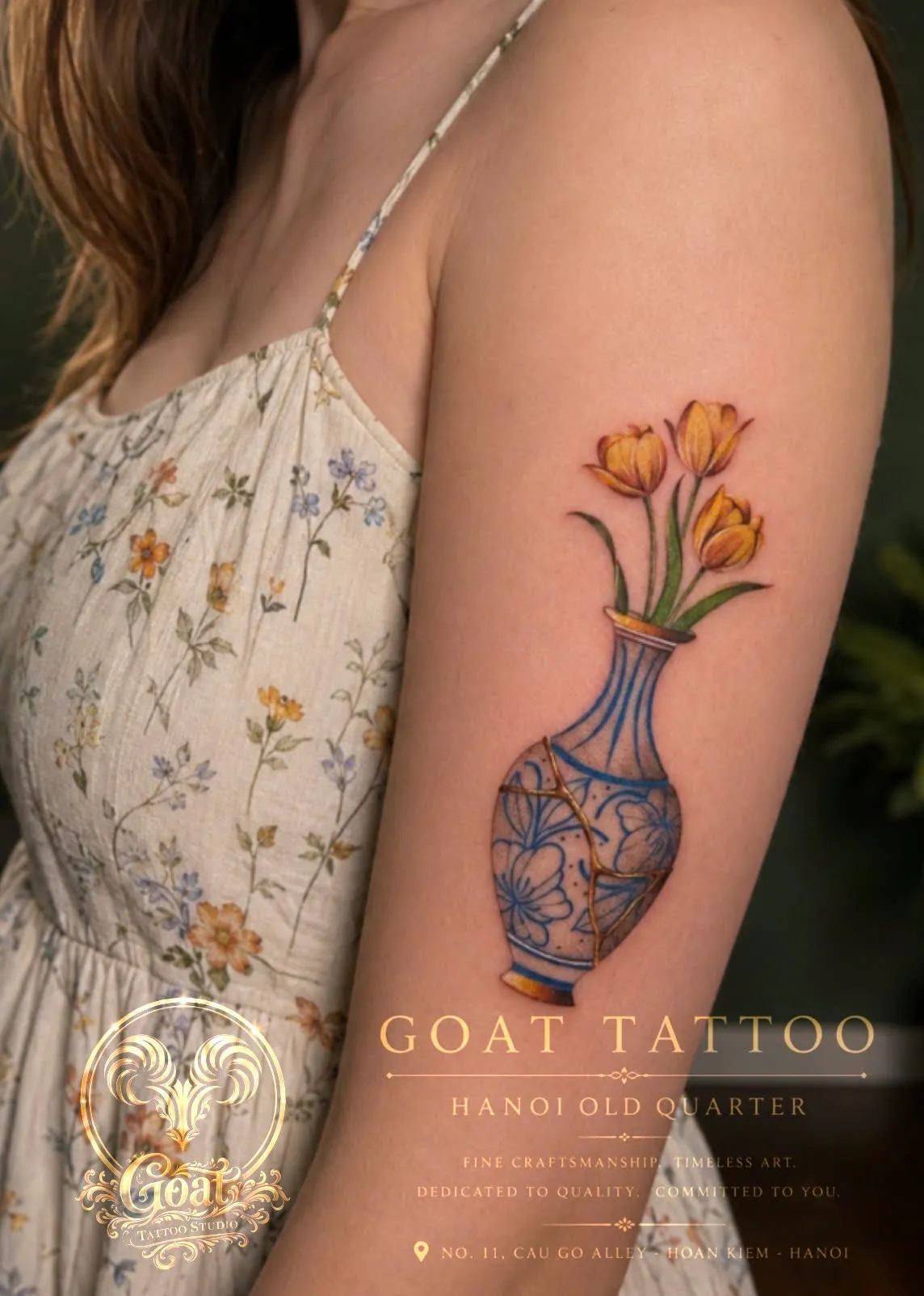
Short answer: a kintsugi tattoo means healing and resilience: the idea that something broken can be repaired and become more beautiful because of its cracks. Kintsugi is the Japanese art of mending broken pottery with lacquer and gold, so the repair is shown, not hidden. As a tattoo it often marks recovery from illness, grief, a breakup or mental health struggles, and the gold lines can even be designed to follow a real scar.
Kintsugi has become one of the most meaningful modern Japanese-inspired designs. Here is what the craft really is, what the tattoo means and how to make the “gold” work on skin.
What kintsugi is
Kintsugi means “golden joinery”. Craftspeople glue broken ceramics back together with urushi, a natural lacquer made from tree sap, then cover the seams with powdered gold, or sometimes silver or platinum. The cracks become bright lines that are part of the bowl’s story.
A popular story says the craft began in the 15th century, when the shogun Ashikaga Yoshimasa sent a cracked Chinese tea bowl away for repair and it came back held together with ugly metal staples, so Japanese craftsmen looked for a more beautiful way to fix it. Whether or not the story is exact, kintsugi grew alongside the Japanese tea ceremony, where old, mended bowls were treasured.
Wabi-sabi: beauty in imperfection
Kintsugi is linked to wabi-sabi, a Japanese way of seeing beauty in things that are imperfect, simple and changing with age. A kintsugi bowl doesn’t pretend it was never broken. That is the heart of the tattoo: you don’t have to hide your history to be whole.
What a kintsugi tattoo means
- Healing and recovery: after illness, surgery, grief, divorce or addiction.
- Mental health: the cracks are real, and so is the repair. It’s sometimes paired with the semicolon.
- Resilience: like the Daruma doll, it’s about getting back up.
- Self-acceptance: scars, mistakes and age are part of who you are.
Kintsugi is a modern tattoo idea. It isn’t one of the old motifs of traditional Japanese tattooing, but it sits well beside them. See our Japanese motif guide for the classic symbols.
Gold lines over real scars
Some people design kintsugi lines to follow a real scar, from surgery, an accident or self-harm, turning the mark itself into the repair. This needs care: the scar must be fully healed and stable (often a year or more), and scar tissue takes ink less evenly than normal skin. Read our guides to tattooing over scars and tattooing over self-harm scars before you plan it.
Making “gold” work on skin
There is no truly metallic gold tattoo ink. Gold is built from yellows, ochres and browns, with white highlights to suggest shine. A few tips:
- Use a dark outline or shadow beside the gold line, so it stays visible as the yellow softens.
- Protect it from the sun: yellow fades faster than black, especially in strong sun.
- Think about skin tone: on darker skin, pale yellow can almost disappear. Our skin tone and colour guide explains what stays visible.
- Black and grey version: if you prefer no colour, the cracks can be shown with bright skin highlights and dark edges.
Design and placement
- Classic objects: a bowl, vase or teacup with gold cracks. Flowers growing from the vessel add new life, such as tulips, cherry blossoms or a lotus.
- Kintsugi heart: a cracked heart joined with gold, for healing after loss or heartbreak.
- Style: illustrative and watercolour styles suit colour work; realism suits a glossy ceramic look.
- Placement: the upper arm, forearm, calf or shoulder blade give a vessel enough room for clean crack lines.
At GOAT Tattoo Studio
Our gallery includes a colour illustrative kintsugi-style cracked vase with yellow tulips on the upper arm. At your consultation we can help you plan the crack lines, the gold shading and the colours that will last on your skin.
Planning a colour piece in Hanoi? Our colour and watercolour tattoo page shows prices, the artists who do this style and recent work. For Japanese-inspired designs, see our Japanese tattoo page.
Related Guides
- Japanese Tattoo Motifs and What They Actually Mean
- Daruma Tattoo Meaning: One Eye, Two Eyes and Getting Back Up
- Semicolon Tattoo Meaning: The Real Story Behind Project Semicolon
- Can You Tattoo Over a Scar or a Mole?
- Getting a Tattoo Over Self-Harm Scars: What to Actually Know
- Lotus Tattoo Meaning: Buddhist Symbol vs. Vietnam's National Flower
- Watercolor & Illustrative Tattoos: What to Actually Look For
- Does Skin Tone Affect Which Tattoo Colors Work Best?
- Tulip Tattoo Meaning: Perfect Love, Rebirth and Tulip Colours
- Bonsai Tattoo Meaning: Patience, Balance and Resilience
- Greek Statue Tattoo Meaning: Broken Busts, Stoics and Lost Colours
Ready to book your tattoo in Hanoi?
Send us your idea and preferred dates — we'll reply with a clear quote before you sit in the chair.
Book Now