 GOAT TATTOO
Fern Tattoo Meaning: New Beginnings, Silver Fern and Fern Fever
Published October 27, 2026
Short answer: a fern tattoo usually means new beginnings, growth and resilience. Ferns are among the oldest plants on Earth, older than the dinosaurs, and they are often the first plants to grow back after a fire or a volcanic eruption. The young frond unfurls from a tight spiral, which in Māori art became the koru, a symbol of new life, and New Zealand’s silver fern is a national emblem of pride. In Japan a fern called urajiro decorates the New Year as a wish for long life and a lasting marriage, in Slavic folklore the magical “fern flower” brings luck, and the Victorians loved ferns so much they had a name for the craze: pteridomania.
A fern is a quiet, elegant tattoo with a surprising amount of history. Here is where its meanings come from and how to design one that keeps its fine detail for years.
An ancient survivor
Ferns were growing on Earth hundreds of millions of years ago, long before flowers, and many of today’s coal deposits are partly made of ancient fern forests. They have no flowers and no seeds; instead they spread by tiny spores carried on the wind, often from the brown dots you can see under a leaf. Because they are so hardy, ferns are often among the first plants to return to burned forests and fresh volcanic ground. That is why a fern can mean surviving hard times, starting again after a loss, or a quiet, steady kind of strength that does not need to be noticed.
The unfurling frond: the koru and the silver fern
A new fern leaf, called a fiddlehead, grows as a tight coil that slowly opens. In Māori art this shape became the koru, a spiral that stands for new life, growth and a return to one’s origins, and it appears in carving, painting and tā moko. New Zealand’s silver fern, or ponga, has leaves that are silver-white underneath; Māori hunters are said to have bent them over to mark a path home through the forest at night. Today the silver fern is worn by New Zealand’s national sports teams, including the All Blacks, and it is one of the country’s best-known national symbols. See our Māori symbols guide for the other motifs it is often combined with.
Japan: urajiro and long life
In Japan a fern called urajiro (裏白, “white underside”) is one of the traditional New Year decorations, placed under the stacked rice cakes of kagami mochi or added to the straw shimekazari hung on doors. Its paired leaves are said to stand for a married couple, its white underside for growing old together until both have white hair, and also for a pure, honest heart. Because the plant stays green all year and keeps sending out new leaves, it is a wish for a long life and a family that continues to grow.
The magic fern flower
Ferns never flower, but in Slavic and Baltic folklore there is one exception: on Midsummer night, called Kupala Night in Ukraine, Belarus and Russia and Jāņi in Latvia, a fern is said to bloom for just a moment. Whoever finds the glowing flower will gain luck, wealth, the power to understand animals or the ability to find hidden treasure, but it is guarded by spirits and very hard to reach. Young people still go into the forest on that night to “look for the fern flower”. As a tattoo, it can stand for magic, hope, and searching for something rare.
Victorian fern fever
In Britain between about the 1840s and the 1890s there was a real craze for ferns, which the writer Charles Kingsley called pteridomania, from the Greek word for fern. People collected them on country walks, grew them in glass cases inside their homes, and printed fern patterns on pottery, fabric, garden furniture and even gravestones. In the Victorian language of flowers the fern stood for sincerity, and also for fascination and magic. So a fern can also be a romantic, slightly old-fashioned tattoo, especially paired with flowers such as roses or lavender.
Design and placement
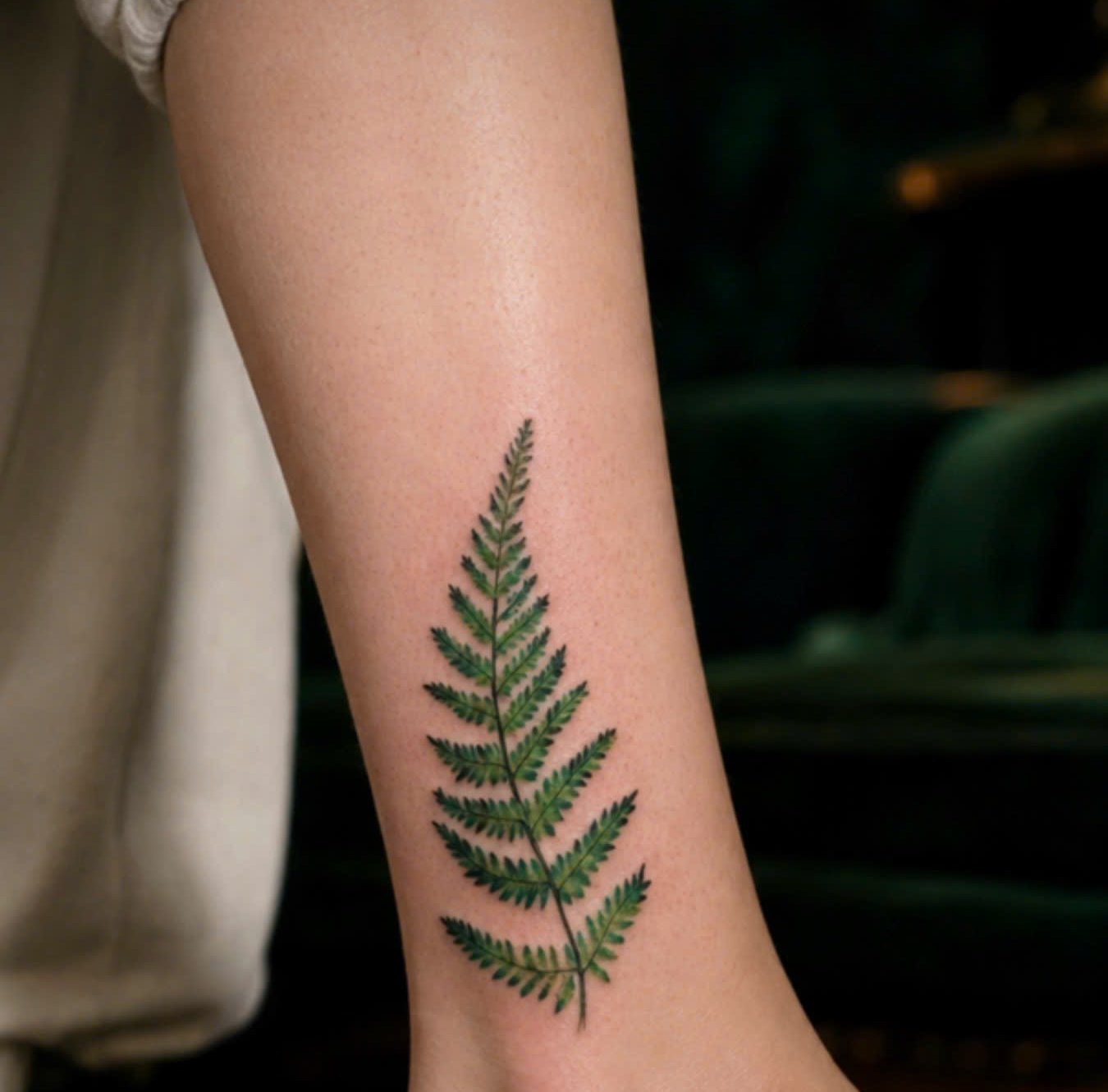
- Style: a single realistic fern in colour, as in our piece below, looks like a pressed botanical specimen. Fine-line ferns are also popular, and black-and-grey or watercolour styles work well for larger leaves.
- Detail: the many small leaflets need space. A fern that is too small can blur into a single green shape over the years, so a palm-length fern is a good minimum for a detailed design, while a tiny fern works better as a simple outline.
- Combinations: a fern with a coiled fiddlehead (for new beginnings), with mushrooms and moss (forest themes), with a tree of life, with other leaves such as a maple leaf, or a silver fern with a koru for New Zealand.
- Placement: ferns grow tall and narrow, so they fit the ankle, calf, forearm, side ribs and spine very well. See our foot and ankle tattoo price guide for sizes and costs.
At GOAT Tattoo Studio
Our gallery includes a realistic colour fern on the back of an ankle: one tall frond with a thin dark stem, every leaflet shaded in several greens from deep forest green to light yellow-green, with no outline, so it looks like a real leaf resting on the skin. In a consultation we can help you choose the type of fern, its size and direction, and whether to keep it alone or add other plants.
Planning a realistic botanical or colour design in Hanoi? Our colour and watercolour tattoo page shows prices, the artists who work in this style and recent work.
Related Guides
- Koru Tattoo Meaning: Beyond the Air New Zealand Logo
- Maori Tattoo Symbols: What They Actually Mean
- Tree of Life Tattoo Meaning Explained
- Flower Tattoo Meanings Explained
- Lavender Tattoo Meaning: Calm, Healing, Devotion and Memory
- Maple Leaf Tattoo Meaning: Canada, Momiji and Autumn Change
- Watercolor & Illustrative Tattoos: What to Actually Look For
- Foot & Ankle Tattoo Price and Aftercare Guide
- Eucalyptus Tattoo Meaning: Healing, Renewal and Fire
Ready to book your tattoo in Hanoi?
Send us your idea and preferred dates — we'll reply with a clear quote before you sit in the chair.
Book Now