 GOAT TATTOO
Pikorua Tattoo Meaning: The Bond Symbol With a Surprisingly Recent History
Published October 24, 2026
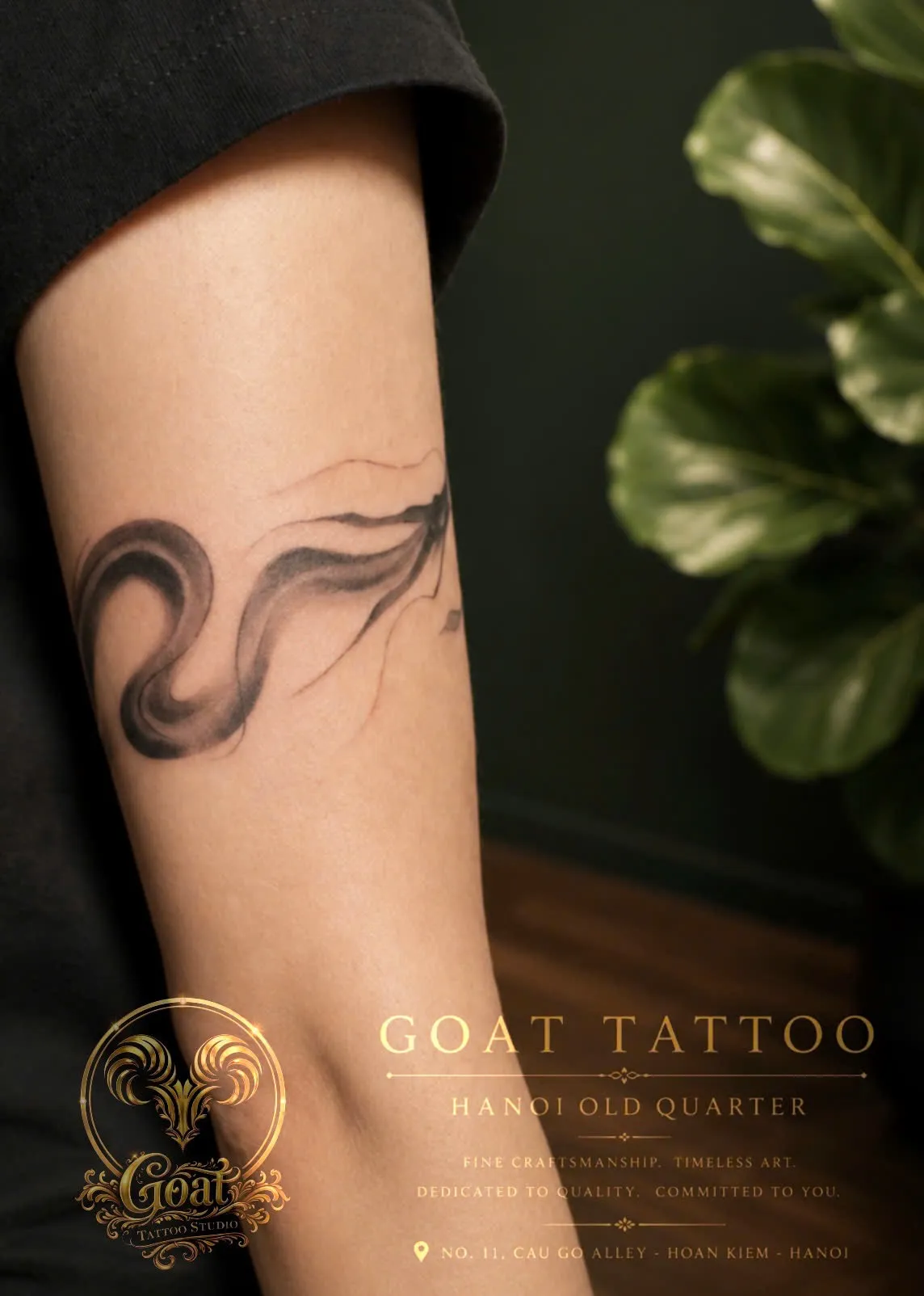
A double spiral shows up often in Polynesian-tribal flash captioned simply “connection” or “friendship,” usually without saying which specific motif it is. The pikorua — two koru joined into one continuous shape — carries a real, specific meaning worth knowing, along with an honest wrinkle about its age that most quick meaning-lists skip entirely.
Two koru, one unbroken line
A pikorua is formed by joining two koru spirals so the line never actually breaks — it twists from one spiral straight into the other rather than being two separate shapes placed side by side. That unbroken quality is the point: a single koru traces one person’s own growth curling back toward its origin, while a pikorua’s continuous line is read as two paths running together with no clean start or end to either one. Visually it’s often confused with a Celtic twist knot by people unfamiliar with Māori design, but the pikorua’s form comes specifically from doubling the fern-frond koru spiral, not from interlocking cord-like strands.
A bond between two — people, paths, or peoples
The core meaning is connection: a bond between two people, most often read as friendship, partnership, or love meant to last. Because the two spirals are equal in size and joined rather than one wrapped around the other, it’s also used to mark relationships where neither side is the “lead” figure — a parent and child, or two people on separate but intertwined journeys. Beyond individuals, some sources describe it being given as a gesture of friendship between two different tribes or peoples, extending the same “joined but distinct” idea from a personal bond to a wider one.
The honest part: how old is this design, really?
Here’s the detail worth knowing before assuming pikorua sits alongside koru and hei matau as ancient tā moko: unlike those motifs, which are documented across generations of Māori carving and ornament, the pikorua shows up mainly as a design in carved pounamu (greenstone) jewelry, and several sources that work directly with pounamu place its popularization closer to the 19th century than to centuries-old tā moko tradition. That doesn’t make the meaning fake — the bond-between-two reading is genuine and widely used — but it’s a different kind of history than hei matau’s Māui legend or koru’s documented place in kōwhaiwhai carving, and worth saying honestly rather than implying every Māori spiral motif has the same ancient pedigree.
What actually matters when choosing
A pikorua works best when it’s actually about a specific relationship rather than a general “connection” feeling — a matching or complementary piece with someone, a tribute to a parent, a mark of a friendship meant to hold. If you want a single unfolding-growth story instead, a plain koru says that more precisely; our koru tattoo meaning guide covers that distinction directly. Either way, naming the actual relationship at your consultation lets your artist size and weight the two spirals to read as genuinely equal rather than an ambiguous double swirl.
What to expect at GOAT Tattoo Studio
Linker, our Maori and Polynesian specialist, can talk through whether a pikorua, a plain koru, or a larger composition actually fits the relationship or story you’re marking — our guide to Māori tattoo symbols covers how it relates to koru, enata, hei matau, and manaia if you’re considering something bigger. See the style come together in our Maori-Polynesian gallery, and we’ll have an honest conversation about meaning and composition at consultation rather than just picking symbols off a list.
Related Guides
Ready to book your tattoo in Hanoi?
Send us your idea and preferred dates — we'll reply with a clear quote before you sit in the chair.
Book Now