 GOAT TATTOO
How Tattoos Actually Fade: The Real Timeline
Published August 28, 2026
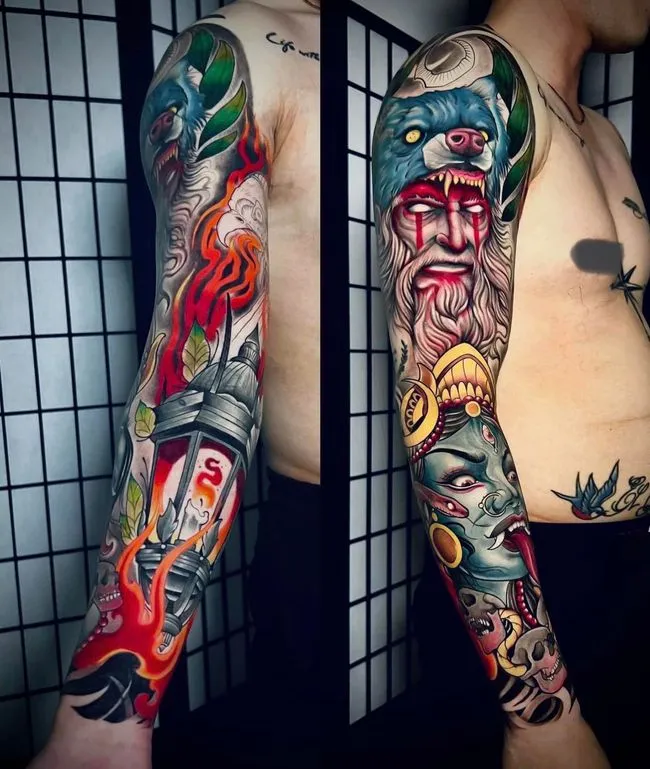
Every tattoo fades eventually — that’s not a defect, it’s how skin works. What’s less well understood is why, how fast, and which parts of a design go first. Here’s the honest version, separate from how a tattoo changes with your body over the years.
What’s actually happening under the skin
Tattoo pigment sits in the dermis, and your immune system treats it the way it treats any foreign material — slowly. Immune cells called macrophages absorb some pigment particles and, over years, carry a portion of it away through the lymphatic system. Separately, UV light breaks pigment molecules down into smaller, less stable fragments — a process called photodegradation — which makes it easier for the body to clear them. The result isn’t ink “disappearing” so much as gradually losing contrast, softening at the edges, and shifting slightly in tone.
A realistic timeline
- The first year: most of what you notice is settling, not fading — the tattoo stabilizes as initial healing completes, and saturation can look slightly different than it did fresh.
- Around 5 years: a well-done tattoo usually still looks largely intact, though fine lines, small details, and solid color fills often start showing mild softening.
- 10 to 20 years: fading, blur, and color shift become more noticeable, especially on areas with more sun exposure or friction — black and deep blue generally hold their contrast far longer than lighter colors.
Which colors fade fastest
- Fastest to fade: white, yellow, and other pale or pastel tones — often the first colors in a piece to lose visibility.
- Slowest to fade: black and deep blue, which is part of why black & grey realism tends to age more gracefully than heavily colored pieces of similar detail.
- In between: reds and oranges typically outlast pale colors but fade faster than black.
What actually affects the speed
- Sun exposure is the single biggest factor within your control — it’s the main driver of photodegradation described above.
- Placement matters — areas with more friction or more sun exposure age faster than protected spots.
- Depth and technique matter — ink placed too shallow tends to fade faster; ink placed too deep can blur rather than fade cleanly. This is part of why artist skill affects long-term results, not just the initial look.
- Ink quality matters — this is one of several reasons a studio’s hygiene and sourcing standards, covered in our studio hygiene checklist, are worth asking about upfront.
Is fading preventable or reversible?
Preventable, partially — consistent sun protection once healed (covered in our aftercare products guide) genuinely slows the process, though nothing stops it entirely over decades. Reversible, not really — once pigment has broken down or been cleared, a touch-up or rework is what restores it, not anything you can do to bring the original ink back.
What to expect at GOAT Tattoo Studio
We’ll talk through realistic long-term expectations for your specific design during your consultation — including whether very fine detail at a small size is likely to hold up the way you’re picturing it, or whether a slightly bolder approach will age better for the piece you actually want.
Related Guides
Ready to book your tattoo in Hanoi?
Send us your idea and preferred dates — we'll reply with a clear quote before you sit in the chair.
Book Now