 GOAT TATTOO
How a Large Tattoo Ages As Your Body Changes
Published August 22, 2026
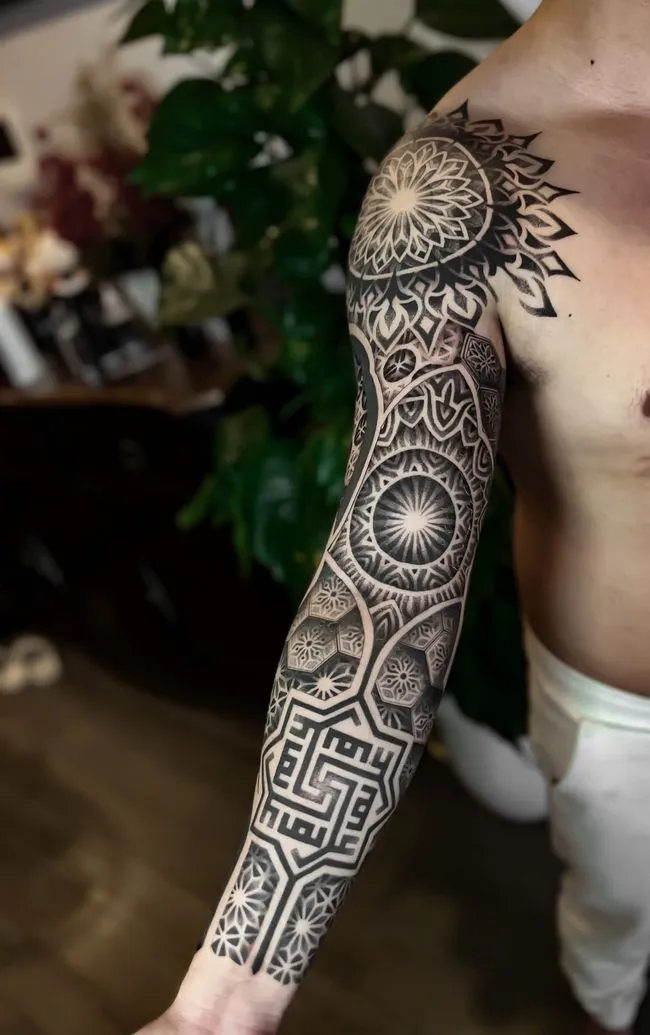
A full sleeve or back piece is meant to last decades, and your body genuinely doesn’t stay the same over decades — so it’s a fair, honest question: how does a large tattoo actually hold up as you change?
The short version: gradual change is fine, rapid or major change is what matters
Large tattoos generally hold up reasonably well over time, but they do move with the body. Aging skin naturally loses some elasticity and collagen, which can soften lines slightly and make a piece look a little less crisp decades in — that’s normal aging, not a sign anything went wrong. What actually risks visibly distorting a piece is rapid or significant change, not the slow, gradual shifts most bodies go through year to year.
How weight change and muscle actually affect a large piece
- Stable areas move less. The upper back, for example, generally holds a design’s proportions better over time than areas that stretch and compress more with weight change.
- Areas prone to real stretching — the stomach, waist, and inner arms — are the ones most likely to visibly shift if weight or muscle mass changes significantly.
- A good artist designs with this in mind from the start, which connects directly to how a large piece is actually planned — our guide on how a sleeve or back is actually designed covers how composition and flow are built around your body, not just laid on top of it.
Pregnancy is the most predictable major change for many women
If pregnancy is realistically in your future, it’s worth factoring into placement decisions now rather than discovering the effect later:
- Tattoos on the abdomen, hips, breasts, and thighs are the most likely to stretch or shift, especially if stretch marks develop in those areas.
- A full sleeve or upper-back piece is generally much less affected than work centered on the stomach or chest, simply because those areas don’t stretch the same way during pregnancy.
What can actually be done if your body changes significantly later
- Some things are genuinely fixable: an artist can rework line weight, add shading, extend background or filler elements, or refresh faded areas to bring a piece back into balance.
- Some things aren’t fully reversible: once skin has stretched or changed significantly, an artist generally can’t restore the exact original proportions — touch-ups and reworks can improve how a piece reads, but they’re an adjustment, not a true reset. Our guide on touch-ups and reworks covers how that process actually works.
- The most reliable strategy is planning ahead, not correcting after the fact — placing and composing a large piece with realistic future movement in mind from the start is far more effective than hoping to fix distortion later.
The honest bottom line
A large tattoo genuinely ages with you, and that’s not a flaw — it’s just how skin works. The real takeaway isn’t to avoid large pieces because your body might change; it’s to be honest with your artist about likely future changes (planned pregnancy, significant weight goals, an active lifestyle that builds real muscle) so the design accounts for it from day one, rather than treating your body at the moment of the tattoo as a permanently fixed canvas.
What to expect at GOAT Tattoo Studio
Tell us about any significant body changes you’re expecting during your consultation — it genuinely helps us design a composition that holds up well for you specifically, not just for how your body looks on the day we start.
Related Guides
Ready to book your tattoo in Hanoi?
Send us your idea and preferred dates — we'll reply with a clear quote before you sit in the chair.
Book Now