 GOAT TATTOO
Buddha Tattoo Meaning: Devotion vs. Decoration
Published October 10, 2026
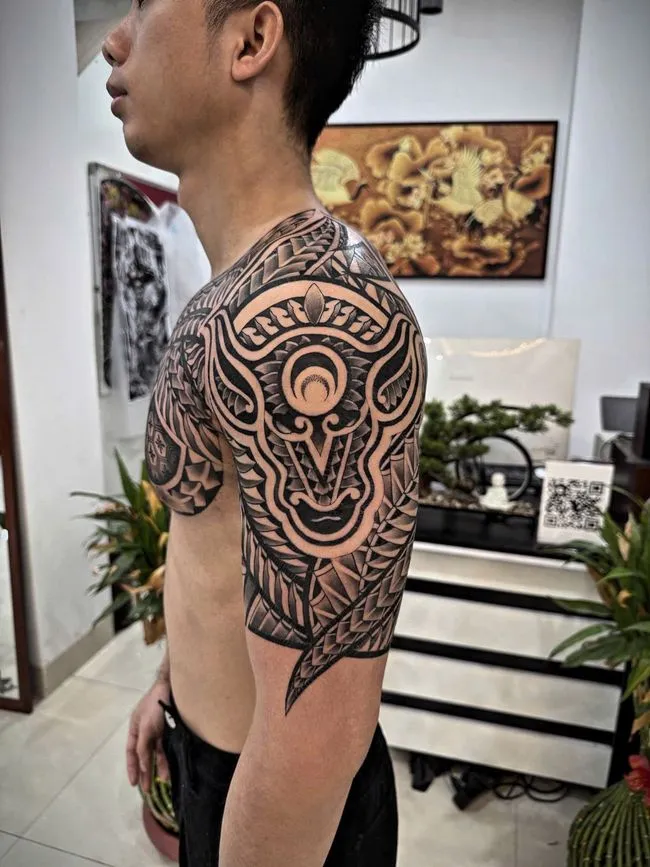
Short answer: a Buddha tattoo carries more real cultural weight than most people expect going in — it’s one of the few symbols where placement genuinely changes whether the design reads as respectful or careless, and that’s worth knowing before you book, not after.
The Buddha is a recognizable, popular tattoo subject worldwide, but it’s genuinely not a neutral image the way a lot of decorative symbols are — it sits closer to the cross or a direct deity image than to something like a lotus, and it’s worth understanding why before choosing it purely for how it looks.
Why placement is the real issue, not the design itself
The specific concern that comes up consistently across Buddhist-majority cultures, Vietnam included, is placement below the waist — legs, feet, ankles, or anywhere considered “lower” on the body. This isn’t superstition without a reason behind it: in Buddhist cultural context, the feet are widely treated as the least-honored part of the body, which is also why pointing your feet at a person, a shrine, or a Buddha statue is considered impolite in everyday etiquette here, not just in tattooing specifically. A Buddha image placed on the calf, ankle, or foot reads as a real misstep to a meaningful number of people, independent of how the artist renders it. Upper-body placement — forearm, shoulder, upper arm, back, or chest — is generally the safer, more widely accepted choice, the same guidance that applies to the Buddhist lotus and other sacred Buddhist imagery.
The devotion-versus-decoration question
Beyond placement, the honest tension with a literal Buddha image is intent. For practicing Buddhists, a Buddha tattoo can be a genuine expression of faith and a daily reminder of the teachings — that’s a real, legitimate reason with real weight behind it. For people with no connection to the practice, choosing the image purely because it “looks peaceful” or fits an aesthetic is where real criticism tends to land, particularly if the design trivializes the figure (cartoonish styling, pairing it with unrelated imagery, or treating it as pure decor rather than a figure of reverence). Neither reason makes you a bad person for wanting the tattoo — but it’s worth being honest with yourself about which one actually applies, the same self-awareness our broader guide to religious and spiritual symbols recommends for Om specifically, which carries a similar tension.
If you want the meaning without the direct-image concern
A direct image of the Buddha isn’t the only way to carry Buddhist symbolism in a tattoo. The lotus represents the same core idea — purity and awakening rising out of difficulty — without the same placement sensitivity or the devotion-versus-decoration question, since it’s a plant rather than a literal image of a revered figure. It’s also Vietnam’s own national flower on top of its Buddhist meaning, which is part of why it’s one of the most requested small tattoos we do here specifically. For anyone drawn to Buddhist symbolism broadly rather than the Buddha’s literal likeness specifically, it’s genuinely worth considering as the lower-sensitivity option.
What actually matters when choosing
If you’re a practicing Buddhist or the figure holds real personal meaning for you, that context is worth sharing at your consultation so the design is composed with real care rather than as a generic stock image. If you’re drawn to it mainly for the look, it’s worth deciding honestly whether the lotus or another Buddhist-adjacent symbol might actually serve you better, and if you do go with a direct image, upper-body placement is the choice that avoids the one issue that comes up most often. There’s no rule that says you can’t get the tattoo — the rule that actually matters is getting the placement and the intent right.
What to expect at GOAT Tattoo Studio
We’re happy to talk through placement and styling honestly at your consultation, including whether a lotus or another approach might better fit what you’re actually going for — our guide to religious and spiritual tattoo symbols covers how the Buddha compares to the cross, Om, hamsa hand, and evil eye in terms of real cultural sensitivity.
Related Guides
Ready to book your tattoo in Hanoi?
Send us your idea and preferred dates — we'll reply with a clear quote before you sit in the chair.
Book Now