 GOAT TATTOO
Artemis Tattoo Meaning: She Protects What She Hunts
Published October 25, 2026
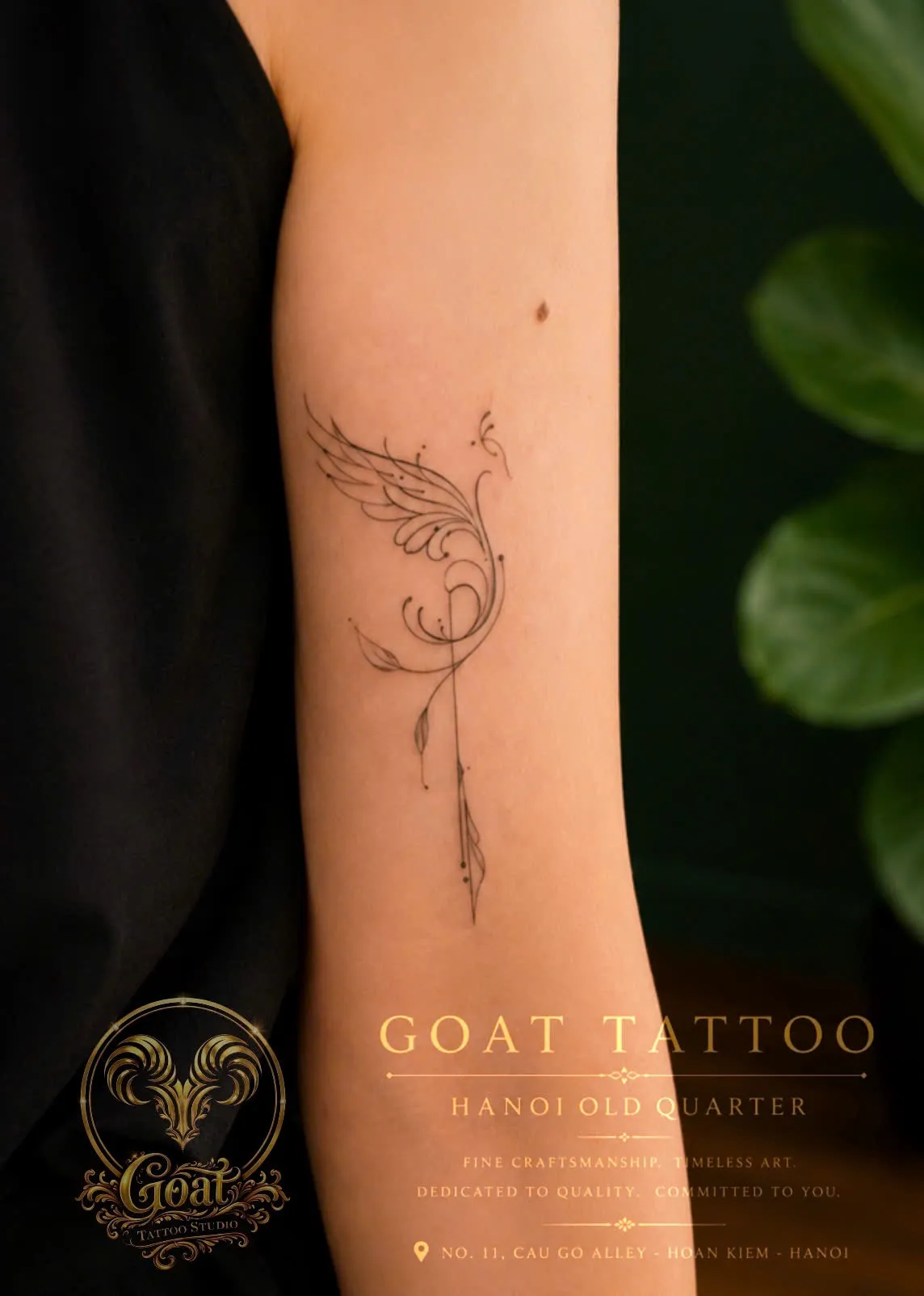
Short answer: “goddess of the hunt” is the label most people reach for with Artemis, and it leaves out the part that actually makes her interesting — she is just as much the protector of the animals being hunted as she is the huntress herself, and ancient worshippers held both at once without treating them as a contradiction.
Artemis is one of the more requested Greek deities for women specifically, usually for the independence and self-reliance she represents, but the mythology underneath that reading is more specific than a generic “strong goddess” summary suggests. Here’s what actually distinguishes her from the rest of the Olympians, and how Rome’s version of her diverged from the Greek original.
The huntress who is also the protector
Artemis carried a silver bow and arrows, and animals - especially deer - were sacred to her both as prey and as something under her protection. The story of Actaeon, the hunter who stumbled on Artemis bathing and was turned into a stag and killed by his own hounds as punishment, is specifically about violating her domain, not about hunting itself being an offense to her. Hunters in the ancient world prayed to her before a hunt and made offerings afterward, treating her as the one who permitted a kill rather than someone opposed to it. The twin roles sit together deliberately: she rules the hunt precisely because she is the wilderness’s own guardian, not despite it.
Diana at Lake Nemi: Rome’s version added something Greece didn’t have
When Rome adopted Artemis as Diana, the goddess kept the bow, the moon, and the wild, but her cult at Lake Nemi, just outside Rome, developed a detail with no real Greek equivalent: her priest there, the Rex Nemorensis (“King of the Wood”), held the position only by killing his predecessor in single combat and could in turn be challenged and killed by anyone wanting the role next. Diana’s sanctuary at Nemi was also, distinctively, a refuge associated with runaway slaves and outcasts, which is a genuinely Roman addition to the figure rather than a Greek holdover. If “Diana” rather than “Artemis” is the name you’re drawn to, it’s worth knowing you’re choosing a cult with its own separate Roman history, not just a different spelling.
The moon is a later layer, not the original core
Classical-era Artemis was not primarily a moon goddess - that association strengthened later, as Greek and Roman writers increasingly merged her with Selene (Luna in Rome) and the underworld goddess Hecate into a loose triple-goddess reading, maiden-mother-crone style groupings that are mostly a later literary and, much later, Wiccan-revival framing rather than how fifth-century-BC Athenians understood her. That doesn’t make the moon connection fake - it’s a real and very old layer - but it’s worth knowing it was added to the hunting-and-wilderness core rather than being the original idea itself.
What actually matters when choosing
If the hunter-and-protector duality is the actual draw, the bow and a deer or stag together read more precisely than either symbol alone. If you specifically want the Roman cult’s edge - the Rex Nemorensis story, the refuge-for-outcasts history - name Diana and that context to your artist rather than defaulting to generic “Greek goddess” imagery. And if the moon is the real point of interest for you, a crescent moon paired with a bow still reads as Artemis/Diana, but it’s honest to recognize that’s leaning on the later syncretic tradition rather than the oldest layer of the myth. Virginity was part of her classical description too, and most people today read that as independence and self-possession rather than a literal requirement - which is a reasonable modern gloss, but worth being clear with yourself that it is one.
What to expect at GOAT Tattoo Studio
We’re happy to talk through which side of Artemis you actually mean - the huntress, the protector, the Roman Diana, or the later moon-goddess layer - during your consultation, rather than defaulting to a generic bow-and-arrow outline. Our guide to Greek god tattoos covers how she fits alongside Zeus, Athena, and the rest of Olympus, and our deer tattoo guide is worth reading if the animal side of her story is the part that drew you in.
Related Guides
Ready to book your tattoo in Hanoi?
Send us your idea and preferred dates — we'll reply with a clear quote before you sit in the chair.
Book Now