 GOAT TATTOO
Polynesian & Samoan Tattoo Symbols: Turtle, Shark Teeth, and Ocean Patterns
Published September 26, 2026
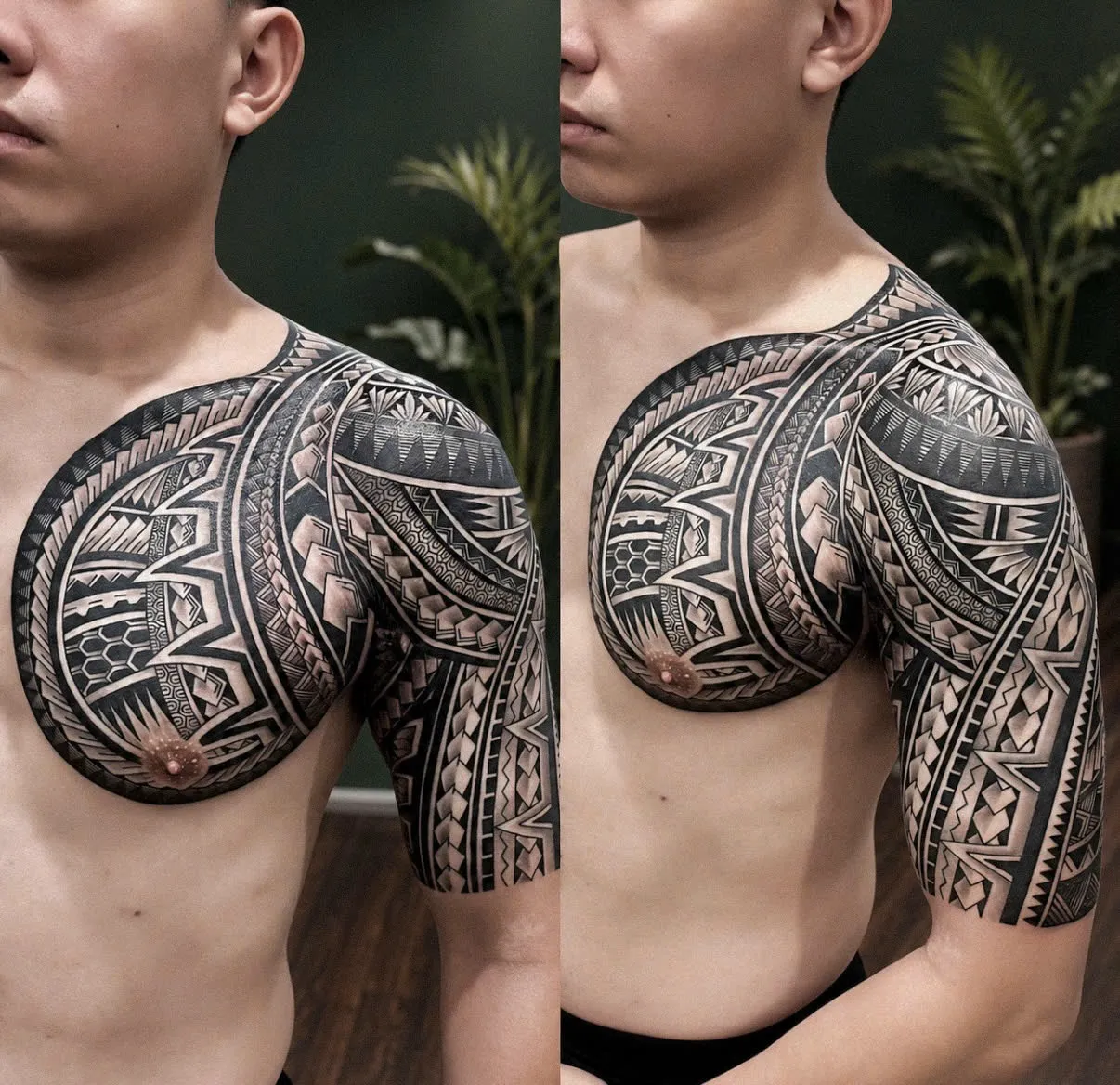
Beyond Māori tā moko specifically, the wider Polynesian world — Samoa, Tahiti, the Marquesas, Hawaii, Tonga — shares a related but distinct set of motifs across its own tattooing traditions. A few of these symbols show up constantly in modern Polynesian-tribal tattooing, and it’s worth knowing both what they mean and where the line sits between this shared design vocabulary and the specific sacred practices some of these cultures still consider separate from it.
Turtle (honu / laumei)
Across Hawaiian, Tahitian, and Samoan tradition alike, the turtle represents longevity, peace, fertility, and safe navigation — turtles were understood as guides that helped early Polynesian voyagers find land, which is part of why the symbol carries such a strong connection to family, ancestry, and finding one’s way. It’s one of the most widely recognized and consistently positive symbols across the whole region.
Shark teeth (niho mano / nifo ’oti)
Repeating triangular patterns representing protection, strength, and guidance — sharks were respected across Polynesia both as genuinely dangerous ocean predators and, in many traditions, as protective ancestral guardians (aumakua in Hawaiian belief). The shark-teeth pattern is one of the most structurally common elements in larger tribal pieces, both for its meaning and because the repeating triangle shape works so well as a design backbone for bigger compositions.
Ocean waves
Flowing linework representing life’s journey and constant movement — an unsurprising, near-universal motif in cultures where the ocean was the primary means of travel, food, and connection between islands. Wave patterns are often used as connective elements that tie a larger composition together rather than standing alone.
Sun and rays
Representing life force, guidance, and new beginnings — often placed at a composition’s center as a focal point that other elements (waves, shark teeth, spirals) radiate outward from.
Spearhead
A symbol of courage and direction, historically tied to a warrior’s readiness and sense of purpose — a common choice in pieces meant to represent personal strength or a decisive life change.
The important distinction: tribal-style tattooing versus tatau
Here’s the part worth being genuinely clear about. The motifs above are shared, widely known, and have circulated in global tattoo culture for decades as a design tradition in their own right — getting a tattoo that draws on turtle, shark-teeth, or wave motifs is not the same category of thing as the Samoan pe’a and malu specifically. The pe’a (a full lower-body tattoo traditionally worn by men) and the malu (a traditional tattoo for women) are sacred, highly ritualized markers of status and identity within Samoan culture, applied by a tufuga ta tatau — a specialist practitioner — using traditional hand tools, through a process tied to specific cultural standing and community recognition. These are not generic designs available to request regardless of background; they belong specifically to Samoan cultural practice. The broader Polynesian-tribal aesthetic that’s become a global tattoo genre is a genuinely different, more open category — but knowing the difference, and not confusing the two, is part of approaching this style with real respect.
What to expect at GOAT Tattoo Studio
Linker, our Maori and Polynesian specialist, works within the broader tribal-style tradition described above and can talk honestly about which motifs fit your design and what they’re actually rooted in — see finished examples in our Maori-Polynesian gallery, and we’re happy to talk through composition and meaning at consultation.
Related Guides
Ready to book your tattoo in Hanoi?
Send us your idea and preferred dates — we'll reply with a clear quote before you sit in the chair.
Book Now