 GOAT TATTOO
Maori & Polynesian Tattoos: The Complete Style Guide
Published September 26, 2026
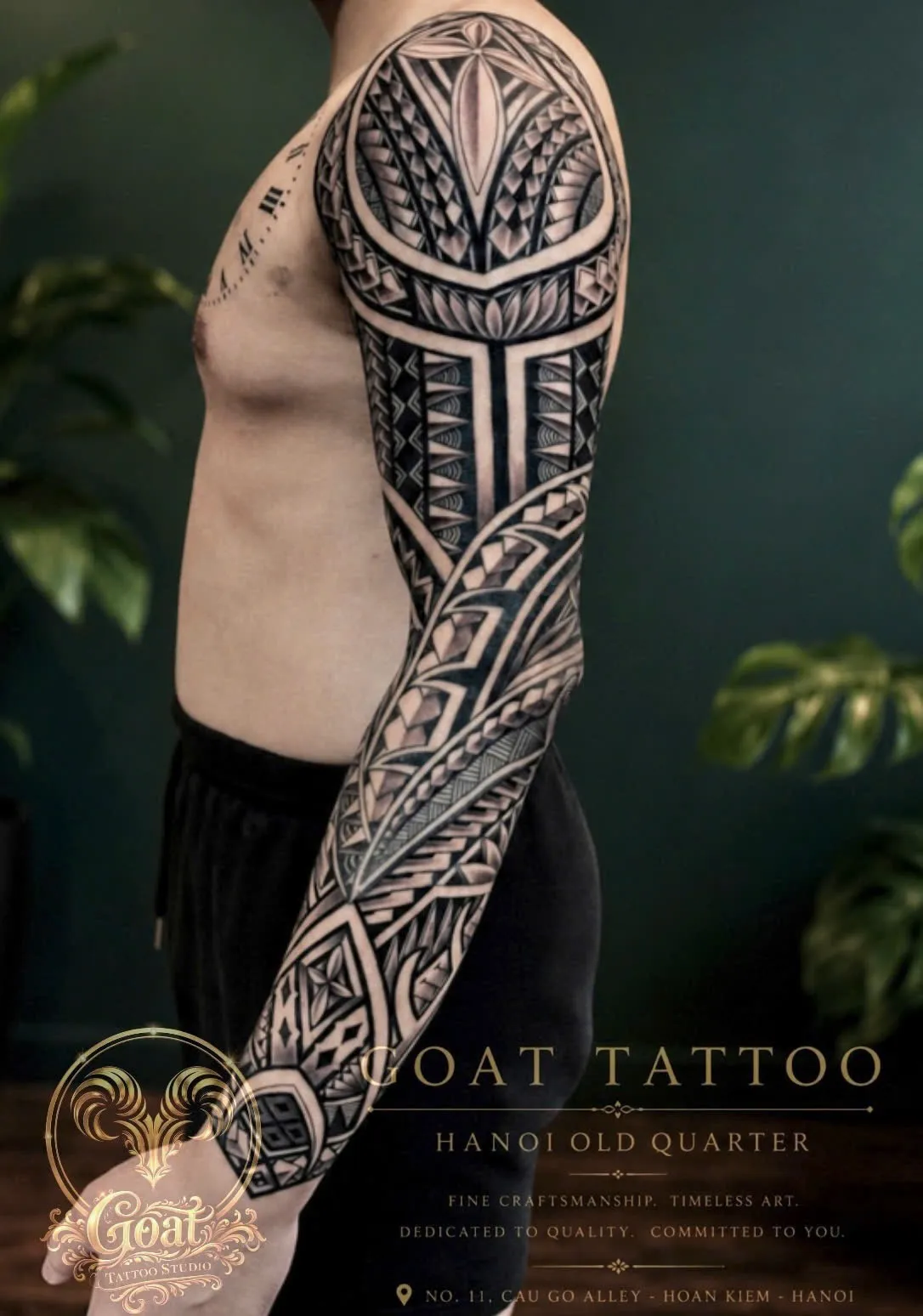
“Maori tattoo” and “Polynesian tattoo” get used almost interchangeably online, and while they share real visual DNA, they’re worth understanding as related but distinct things. Māori tā moko is the specific tattooing tradition of the indigenous Māori people of Aotearoa (New Zealand). “Polynesian tattoo” is the broader umbrella covering the related but separate traditions across the wider Pacific — Samoan tatau, Tahitian and Marquesan tatau, Hawaiian kākau, Tongan tattooing, and more — each with its own patterns, tools, and cultural role. What’s commonly tattooed in studios worldwide today, ours included, sits in a third category: a modern blackwork style inspired by this shared visual language, built from motifs that have circulated in global tattoo culture for decades — distinct from the sacred, genealogy-specific practice each of those traditions actually is within its own culture.
The visual language, at a glance
A handful of recurring elements define the look, and recognizing them helps you talk to your artist with actual vocabulary rather than just pointing at reference photos:
- Spirals (koru in Māori) — based on an unfurling fern frond, used for flow and continuity within a larger composition.
- Enata — small human figures, used across much of Polynesia to represent people: ancestors, family, or specific relationships, depending on how they’re arranged.
- Shark teeth patterns (niho mano, nifo ’oti) — repeating triangular rows, one of the most common structural elements in larger pieces.
- Ocean and wave motifs — flowing linework representing the sea, a constant presence across every Pacific tattooing tradition given how central the ocean is to Pacific Islander life and navigation.
- Solid black fill and dense dotwork — used for contrast and weight, the same technical foundation covered in our blackwork and tribal style guide.
These elements are typically combined into a single flowing composition rather than used as isolated stamps — which is part of why this style rewards a skilled, deliberate designer more than almost any other genre.
What actually separates a well-executed piece
Beyond the general blackwork fundamentals — even saturation, no patchy fill — a few things are specific to this style:
- Pattern flow follows the body, not the reference image. A pattern copied flat from a photo and placed onto a curved arm or back looks noticeably different from one an artist has actually redesigned to wrap correctly around muscle and joint movement. This is one of the clearest tells of real skill in this style.
- Symmetry and spacing under close inspection. Repeating elements — shark teeth rows, spiral chains — should actually be even. Freehand work in this style reveals an unsteady hand quickly, since there’s nowhere for small inconsistencies to hide.
- Composition that reads as one piece, not a collage. Good work builds a single flowing design; weaker work looks like several separate stock patterns placed next to each other.
What to actually know before booking
Full sleeves, chest pieces, and back pieces in this style are usually a genuine multi-session commitment given the scale most people want — our guides on choosing a style for a full-piece project and full-piece pricing by style cover what that actually looks like in terms of time and cost. It’s also worth having an honest conversation with your artist about where a given pattern comes from and what it’s genuinely rooted in versus a modern reinterpretation — a good artist in this style will talk you through that distinction rather than treat every pattern as interchangeable decoration.
What to expect at GOAT Tattoo Studio
Maori and Polynesian tribal work is one of the styles GOAT Tattoo Studio is best known for in Vietnam, and it’s Linker’s specialty in particular — more than a decade of experience with this exact style, across some of the largest pieces we’ve done. Browse our Maori-Polynesian gallery to see how pattern and body flow work together in finished pieces, and we’ll talk through composition, placement, and the meaning behind any pattern you’re drawn to during consultation.
Related Guides
Ready to book your tattoo in Hanoi?
Send us your idea and preferred dates — we'll reply with a clear quote before you sit in the chair.
Book Now