 GOAT TATTOO
Tattoo Pain by Placement: An Honest Comparison
Published August 30, 2026
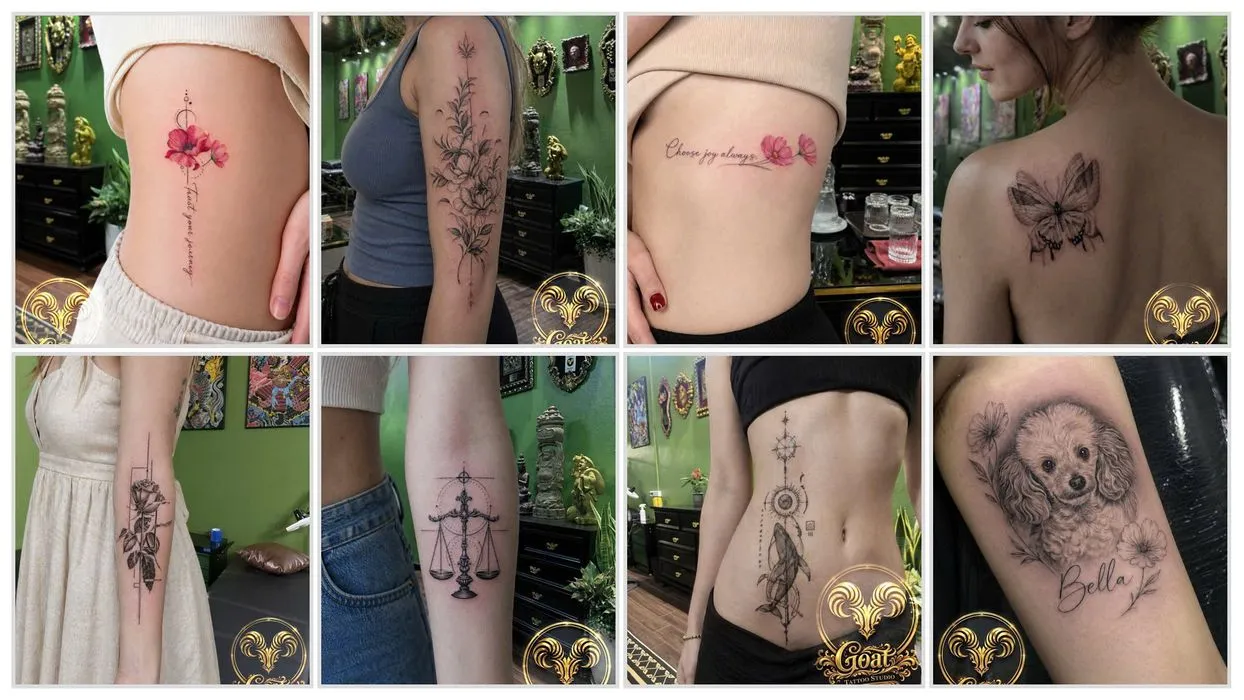
“How much does it hurt” is the question we get asked more than almost any other, and the honest answer always depends on exactly where. Rather than a generic internet pain chart, here’s how the placements we cover in detail actually compare, pulled from what we tell clients about each one.
Consistently rated among the most painful
- Rib and side — often 8–9 out of 10, sometimes reported as the most painful spot on the body for a given person. Thin skin close to bone, sensitive intercostal nerves, and — unlike almost anywhere else — the skin physically moves with every breath through the session.
- Sternum and chest — also consistently 8–9 out of 10. Flat bone with very little cushioning underneath.
- Fingers and knuckles — not usually given a single number, but consistently rated among the more painful zones on the body: thin skin sits almost directly on bone with a high concentration of nerve endings. The upside on finger tattoos specifically is that sessions are usually only 15–30 minutes, so the pain is sharp but brief.
Sharp, but more variable depending on the exact spot
- Foot and ankle — roughly 7–9 out of 10, with bonier areas like the top of the foot or ankle bone itself hurting more than fleshier spots nearby.
- Neck — this one genuinely depends on exactly where: the nape (back, under your hairline) is moderate and more tolerable than people expect, thanks to surrounding muscle; the side of the neck is sharper, closer to bone and cartilage; the front of the throat is the most sensitive of the three. If you’re set on a neck piece but pain tolerance is a concern, a nape design is the usual starting recommendation.
- Back of the hand — sharp, especially where the needle passes directly over a tendon rather than soft tissue.
Sharp for their size, but more tolerable than the above
- Collarbone — around 7–8 out of 10. Bone-adjacent and sharp, but sessions here tend to be short given the popular design sizes.
- Wrist — around 6–8 out of 10, for the same reason fingers and hands catch people off guard: thin skin, not much cushioning.
- Top or outer edge of the hand — generally the most tolerable part of a hand tattoo, though still sharper than fleshier areas elsewhere on the body.
What isn’t on this list, and why it usually hurts less
The shoulder, forearm, and thigh all fall into this easier category — fleshier areas with more muscle and fat between skin and bone are consistently more tolerable across almost anyone’s experience, which is a real part of why they’re such common first-tattoo placements. We haven’t written a dedicated guide for the calf specifically, but it follows the same general pattern. If pain tolerance is your main deciding factor rather than where you actually want the piece, these areas are worth considering over anything on this list.
What actually helps, regardless of placement
Sleep, a real meal beforehand, and staying hydrated make a measurable difference in how a session feels — covered in more detail in our guide to preparing for your appointment. Pain tolerance also genuinely varies person to person; these rankings are a reasonable average, not a guarantee of your own experience.
What to expect at GOAT Tattoo Studio
Tell us honestly where your pain tolerance sits during the consultation — it doesn’t change what’s possible, but it does help us plan realistic session lengths and, for larger pieces on sensitive spots, whether splitting the work across more than one sitting makes sense.
Related Guides
Ready to book your tattoo in Hanoi?
Send us your idea and preferred dates — we'll reply with a clear quote before you sit in the chair.
Book Now