 GOAT TATTOO
Getting a Memorial Portrait Tattoo, Done Right
Published August 19, 2026
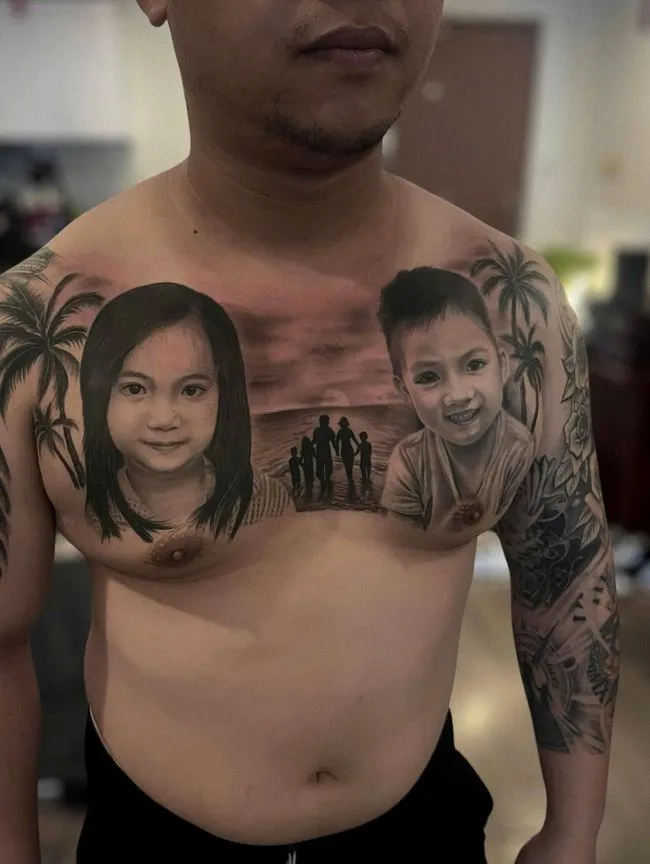
A memorial portrait — of a person or a pet — is one of the most personal tattoos someone can get, and it deserves guidance beyond the usual style-guide advice. Getting the technical side right matters, but so does approaching the process itself in a way that actually honors what you’re trying to capture.
What actually makes likeness work
Portrait realism is widely considered one of the hardest realism subgenres, for a simple reason: faces are something everyone reads instantly, so even a small proportion error is immediately obvious in a way it wouldn’t be in a landscape or an object.
- Likeness comes from proportions, not tiny details. The face has to be built correctly at the sketch and placement stage — if the proportions are off, the piece stops looking like the person or pet even if the shading itself is technically polished.
- Eyes are the fastest giveaway. Eyes set too far apart, too high or low, or shaped slightly unnaturally are the most common way a portrait stops reading as the right person — this is where a skilled artist’s attention matters most.
- The strongest portraits simplify rather than copy every detail. The goal is capturing what actually makes the subject recognizable, not literally reproducing every texture in a photo — over-detailing skin, fur, or wrinkles can actually work against the piece.
What makes a portrait age well
A portrait that looks striking on day one but fades into something unrecognizable a few years later is a real risk if it’s not built correctly from the start:
- A wide value range matters. Strong portraits use clear darks, mid-tones, and lights so the image still reads clearly once contrast naturally softens over the years.
- The darkest points need to stay genuinely solid. Pupils, eyelid creases, and shadow anchors are what keep a portrait’s structure intact as it ages — this is part of why shading quality is worth scrutinizing closely in an artist’s portfolio, something our black & grey realism guide covers in more depth.
- Relying too heavily on bright highlights is risky. The lightest tones fade first, so a portrait built mostly around highlights rather than solid dark structure is more likely to wash out over time.
- Size matters more here than in most styles. A portrait that’s too small for the level of detail requested tends to lose both proportion and clarity faster than a larger one — this connects to the same size-and-skill relationship that applies to large-scale work generally.
Choosing a reference photo
This is the part that’s genuinely different from other realism work, and it matters more than people often expect:
- Use the clearest photo available, ideally one with good lighting and a straight-on or three-quarter angle rather than an extreme angle or heavy shadow.
- Choose a photo that actually shows what you want remembered — a specific expression, distinctive markings, or a particular moment — rather than just the most recent or most convenient photo available.
- Combining a few photos is normal, if no single one captures everything clearly — a good artist can work from multiple references to build one accurate likeness rather than needing one perfect shot.
- Blurry or very low-light photos make an accurate likeness genuinely harder, not impossible, but worth knowing upfront so expectations are realistic from the first consultation.
The emotional side of the process
Memorial pieces are treated differently by most experienced artists, and honestly, that’s appropriate:
- This is usually a collaborative process, not a quick transaction. Consultation matters as much as the drawing itself for a piece like this — time spent getting the reference and details right upfront pays off in the final result.
- There’s no need to rush it because of grief. The practical advice from portrait artists is consistent: it’s better to wait until you have the right reference photo and a clear sense of what you want than to book quickly while still processing a loss.
- It’s completely normal for this to be an emotional session, not just a technical one — a good studio treats that as expected, not something to feel awkward about.
What to expect at GOAT Tattoo Studio
Bring whatever reference photos you have, even if you’re not sure which one is best — we can help you figure out what will actually work, and there’s no pressure to have it all decided before you reach out. Take the time you need before booking; a piece like this is worth getting right.
Related Guides
Ready to book your tattoo in Hanoi?
Send us your idea and preferred dates — we'll reply with a clear quote before you sit in the chair.
Book Now