 GOAT TATTOO
Hei Matau Tattoo Meaning: The Hook That Fished Up New Zealand
Published October 17, 2026
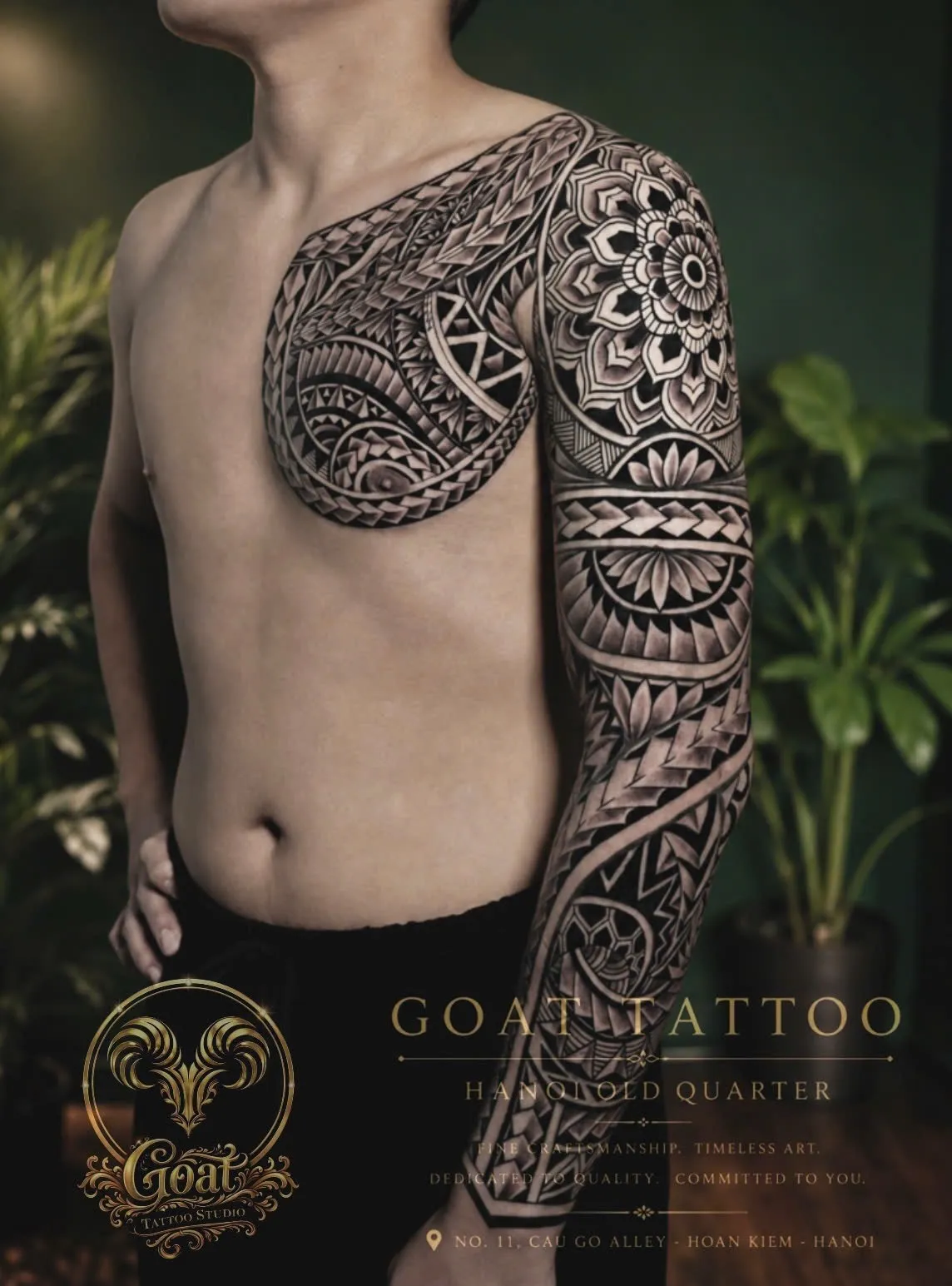
A stylized fish hook shows up constantly in Polynesian-tribal tattoo flash, usually with a vague caption like “good luck symbol.” The hei matau is a real, specific Māori motif with its own legend and its own god attached to it — worth knowing in full before it ends up on your skin as generic ocean decoration.
The legend of Māui and the hook that caught the North Island
In Māori tradition, the demigod Māui used a hook — in some tellings fashioned from his grandmother’s jawbone — to haul up a massive fish from the ocean depths. That fish became the North Island of New Zealand, still called Te Ika-a-Māui, “the fish of Māui,” today. The hei matau’s shape is a direct reference to that specific hook, not a generic fishing tool stylized for decoration — which is why the symbol carries weight as a piece of a very concrete national origin story rather than an abstract “ocean vibes” shape.
What the hei matau actually represents: prosperity, safe travel, and Tangaroa
Beyond the Māui legend, the hei matau is tied to prosperity and abundance, and specifically to safe travel across water — a serious concern for a seafaring culture that depended on the ocean for survival and faced real danger crossing it. The symbol also carries a built-in acknowledgment of Tangaroa, the Māori god of the sea: wearing the hook has traditionally been read as a mark of respect toward Tangaroa and the ocean he governs, not just a personal-luck charm. In te reo Māori, “hei” refers to something worn around the neck and “matau” means fish hook — a reminder that the design started as a wearable pendant, usually carved from pounamu (greenstone) or bone, long before it became a tattoo motif.
From pounamu pendant to tattoo: how the symbol traveled
The earliest hei matau were practical fishing hooks before they became ornamental pendants, often kept as treasured family heirlooms and traded more widely as contact with Europeans grew. As a tā moko element, it sits alongside koru, enata, and manaia as one of the most recognized motifs in Māori design — our guide to Māori tattoo symbols covers how those four relate to each other. The same honest distinction applies here as with any Māori motif worn outside the culture: a hei matau tattoo for someone without Māori whakapapa (genealogy) generally falls under kirituhi rather than tā moko proper, which our guide to Polynesian tattoos and cultural appropriation explains in more depth.
What actually matters when choosing
A hei matau reads cleanly as a standalone piece — the hook shape holds up well at small sizes — or as one element inside a larger Polynesian-tribal composition built around an ocean or travel theme. If the meaning you actually want is “safe journey” or “prosperity,” say that specifically at your consultation rather than assuming the shape alone carries it; a good artist can adjust the hook’s curve and surrounding linework to support that intent rather than leaving it as an ambiguous fishhook shape.
What to expect at GOAT Tattoo Studio
Linker, our Maori and Polynesian specialist, designs with the Māui legend and the Tangaroa connection in mind rather than treating the hei matau as interchangeable tribal clip-art — see the style come together in our Maori-Polynesian gallery, and we’ll talk through composition and placement honestly at consultation.
Related Guides
Ready to book your tattoo in Hanoi?
Send us your idea and preferred dates — we'll reply with a clear quote before you sit in the chair.
Book Now