 GOAT TATTOO
Anime & Manga Tattoos: What to Actually Know Before Booking
Published September 14, 2026
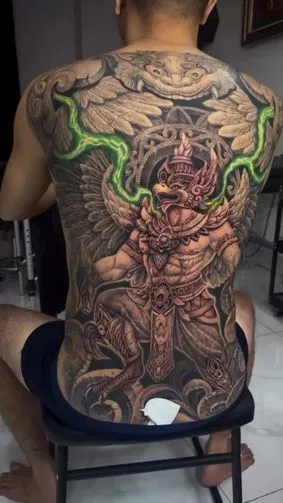
Anime and manga tattoos have grown into their own real, distinct category — not a subset of traditional Japanese-style (irezumi) work, even though people sometimes lump them together because of the shared cultural origin. If a favorite character or scene is what you’re picturing, it’s worth understanding what actually makes this style work well on skin before you book.
Why it’s a different style from traditional Japanese work
Our Japanese-style tattoo guide covers irezumi — bold outlines, background integration, and imagery rooted in Edo-period woodblock prints. Anime and manga tattoos draw from a completely different visual language: flat cel-shaded color, thin and often more delicate linework, and character-accurate proportions borrowed directly from the source art rather than from centuries-old tattoo convention. Asking an artist for “Japanese style” when you actually want a specific anime character can lead to a real mismatch in expectations, so it’s worth being precise about which you mean.
What actually separates a well-executed piece from one that ages badly
- Line weight consistency matters more here than almost any other style. Manga art often uses very thin, precise linework in the source material, but a line that thin doesn’t always hold up on skin over years — a good artist will adapt the linework to be durable without losing what makes the character recognizable.
- Flat color needs to stay flat. Cel-shaded color (the hard-edged color blocks anime is known for, without gradient blending) needs even, solid saturation — patchy or uneven fill is one of the more common issues specifically in this style, since there’s no shading to hide inconsistency the way there is in more painterly styles.
- Likeness accuracy is its own skill. A character needs to actually read as that character — proportions, expression, and specific design details (hair shape, eye style, signature colors) all matter more here than in an abstract or symbolic tattoo, where some interpretation is expected.
What to bring to your consultation
- Clean, high-resolution reference art — official art or a clear panel from the source material works better than a blurry screenshot or fan art with an inconsistent style.
- Multiple angles or poses if you have a specific scene in mind, since a single image sometimes doesn’t give an artist enough to work with for a dynamic pose.
- An honest answer about size — a highly detailed panel with a lot going on genuinely needs real canvas space to stay legible over time; shrinking a busy scene down too small is one of the most common reasons this style doesn’t age well.
What actually matters when choosing placement and size
Forearms, calves, and thighs tend to work well for anime and manga pieces because they offer enough flat, visible space for both linework and color to stay clean. Very small pieces can work for a simple, iconic image (a single symbol or a stripped-down character silhouette), but a detailed scene with multiple elements needs more room than people often expect going in.
What to expect at GOAT Tattoo Studio
Bring your reference art to a consultation and we’ll talk honestly about what will and won’t translate well to skin at your intended size — including whether a design needs simplifying to actually hold up over time, rather than just replicating the source image exactly and hoping it ages well.
Related Guides
- Color & Japanese-Style Tattoos: What to Actually Look For
- How to Find Tattoo Design Ideas Before You Book in Hanoi
- American Traditional vs. Neo-Traditional Tattoo: What's Actually Different
- Custom Tattoo vs. Flash Tattoo: What's Actually Different
- Fine Line vs. Micro Realism Tattoo: What's Actually Different
Ready to book your tattoo in Hanoi?
Send us your idea and preferred dates — we'll reply with a clear quote before you sit in the chair.
Book Now