 GOAT TATTOO
Getting a Vietnamese Word Tattooed: What to Know First
Published August 31, 2026
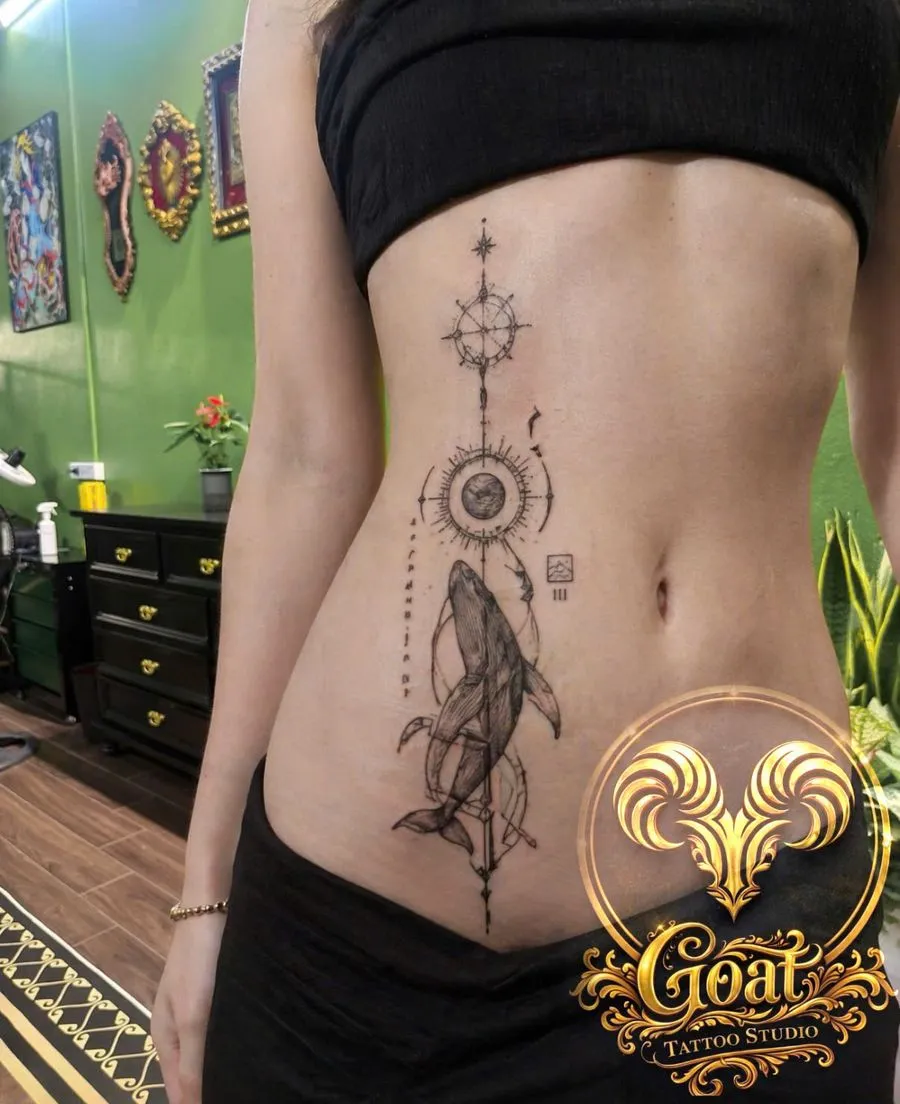
A word or phrase in the local language is one of the most requested souvenir tattoos for anyone spending real time in Vietnam. Worth knowing before you book: Vietnamese isn’t written in characters the way Chinese or Japanese are — it uses the Latin alphabet, the same letters as English, layered with diacritical marks. That similarity to a script you already recognize is exactly what makes it easy to get wrong.
Why this is a different problem than a Chinese or Japanese character tattoo
With a character-based script, an error is usually obvious — the wrong character just looks wrong, or means something completely unrelated. Vietnamese diacritics are subtler: drop or misplace one mark on a word that otherwise looks fine, and it can read as a completely different word, or as no real word at all. The base letters can look identical while the actual meaning is entirely different.
How much one mark can change
Vietnamese diacritics do two different jobs, which is part of why they’re easy to underestimate:
- Tone marks change the word entirely. The base spelling “ma,” with six different tone marks, gives six different words — má (mother/cheek), mà (but), mả (grave), mã (horse/code), mạ (rice seedling), and ma itself (ghost). The same pattern applies to “la”: lá (leaf), là (is/to be), lạ (strange), lả (faint), and lã (a surname/plain water in certain contexts). One missing mark, one real word swapped for another.
- Vowel marks aren’t optional styling — they’re different letters. A, ă, and â are three separate letters, not the same “a” with decoration. The same goes for o, ô, ơ and u, ư. Drop the mark and you haven’t just changed the pronunciation — you’ve spelled a different word.
Why translation apps and generic fonts get this wrong
Machine translation often treats Vietnamese as “Latin script with some accents,” when it actually has six tones and a separate layer of vowel-quality marks that both need to land exactly right. On top of that, plenty of fonts weren’t built with proper Vietnamese support, so even a technically correct phrase can render with misplaced or dropped marks once it’s typeset — an error that’s easy to miss if you’re not reading Vietnamese yourself.
How to actually verify a Vietnamese phrase before it’s permanent
- Have an actual native speaker read the final text, not a translation app. Ask them to confirm both the meaning and that every mark is present and placed correctly — the same standard we’d recommend for any lettering tattoo, regardless of language.
- Ask about tone, not just dictionary meaning. A correct dictionary word can still read as overly formal, regional, or simply not how anyone would naturally phrase the sentiment you’re going for.
- Get the phrase as plain text from that person, and copy it exactly — don’t retype it into a different app or font afterward, which is exactly where marks tend to shift or drop.
- Ask to see the actual stencil before it touches your skin, and have your Vietnamese speaker check that specific printed version, not just the version you originally agreed on — fonts and copy-paste can introduce errors between approval and stencil.
What to expect at GOAT Tattoo Studio
Bring the phrase and its intended meaning to your consultation. Our team speaks Vietnamese natively, so we’ll check the diacritics and phrasing with you before anything is finalized — the same verification step we’d want for a script tattoo in any language.
Related Guides
Ready to book your tattoo in Hanoi?
Send us your idea and preferred dates — we'll reply with a clear quote before you sit in the chair.
Book Now